
It’s 9:47 AM. You’ve already opened six browser tabs, started three emails, filled your coffee mug twice, and somehow still haven’t tackled the one task you swore you’d finish by 10.
Your brain is a kaleidoscope of urgency and inspiration. You’re full of ideas—brilliant ones—but they scatter like confetti the second you try to pin them down. It feels like momentum without movement. Vision without structure.
For many adults with ADHD, this moment is painfully familiar. Especially for entrepreneurs or creatives whose professional lives depend on clarity, consistency, and execution.
That’s where ADHD coaching steps in—not as a cure, but as a compass.

What Is ADHD Coaching?
ADHD coaching is a collaborative, action-oriented partnership designed to help individuals with ADHD achieve their personal and professional goals. It differs from therapy, which often focuses on healing past wounds or managing mental health diagnoses. Coaching, instead, focuses on the present and future.
An ADHD coach helps clients:
- Build practical systems tailored to their neurodiverse minds
- Stay accountable without shame
- Navigate transitions (new jobs, projects, routines)
- Break down big goals into achievable actions
According to the ADHD Coaches Organization (ACO), coaching is based on the assumption that the client is creative, resourceful, and whole. The coach doesn’t “fix” you. Instead, they help you build scaffolding for your strengths.
“The value of ADHD coaching is that it provides both structure and flexibility, allowing clients to set the agenda while also being gently guided toward their goals.” — CHADD.org
ADHD Coaching vs. Therapy
A common question: How is ADHD coaching different from therapy?
| Therapy | ADHD Coaching |
| Often explores past trauma, emotions, diagnosis | Focuses on present/future goals and behaviors |
| Licensed mental health professional | Trained coach (certified but not always licensed clinicians) |
| Can treat co-occurring conditions like anxiety/depression | Helps with structure, productivity, accountability |
That said, many people benefit from both therapy and coaching, especially when ADHD intersects with emotional regulation challenges or burnout.

What Does ADHD Coaching Actually Look Like?
Depending on the program or coach, ADHD coaching might include:
• One-on-One ADHD Mentoring
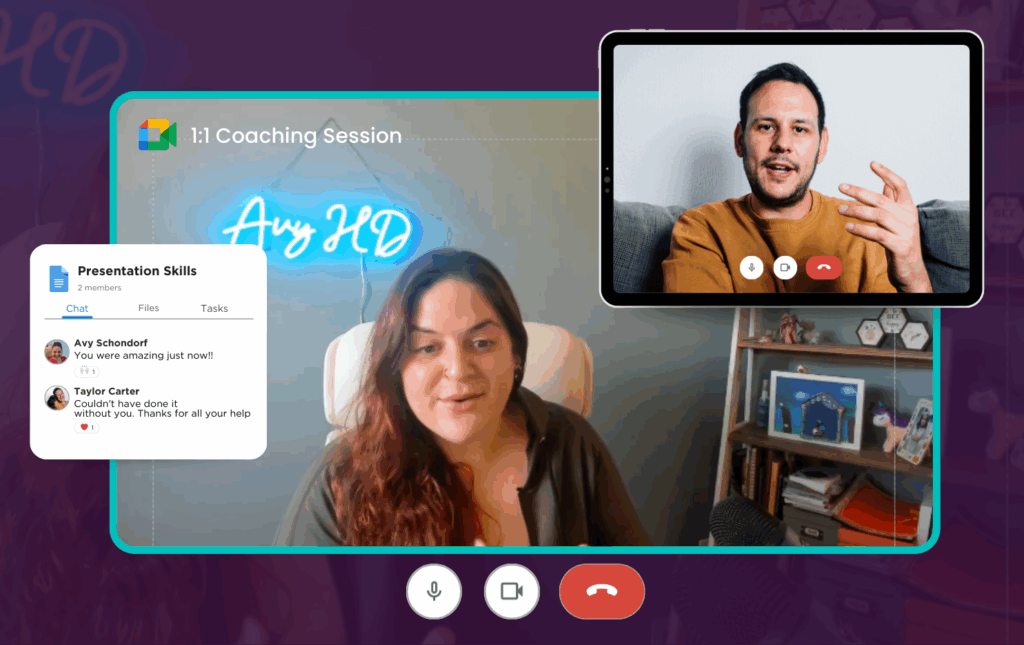
Clients meet weekly or bi-weekly for 45-60 minutes with their coach, discussing progress, identifying roadblocks, and crafting strategies. Sessions might focus on:
- Managing distractions
- Task prioritization
- Emotional regulation during overwhelm
- Goal setting for business or creative projects
• Group Coaching for Neurodiverse Adults
Group coaching provides shared accountability and community. These sessions may center on themes like procrastination, time blindness, or communication challenges in work settings.
• Virtual ADHD Coaching Services
With the rise of online platforms, many coaching programs are entirely virtual—making them accessible from anywhere. Coaches often use shared workspaces, messaging tools, and task managers to stay connected between sessions.
• Accountability Partners & Systems
A key benefit of ADHD coaching is having a built-in accountability partner. But beyond that, coaches help clients set up systems that work for their unique brains—from using timers and planners to body doubling and habit-stacking.
“When I started working with my coach, I thought I needed more discipline. Turns out, I needed more compassion and better systems. Now, I don’t judge myself for needing reminders—I just build them in.” — ADDitude Magazine Reader source
ADHD Coaching Success Stories
Case Study: The Entrepreneur with Too Many Tabs
Janelle, a 34-year-old startup founder, described her brain as a browser with 50 tabs open—half playing music. Despite her success, she constantly missed meetings, delayed launches, and felt exhausted from masking her struggles. After six months of coaching, she learned to time-block, delegate tasks more clearly, and build recovery time into her schedule. Her business didn’t just grow—she felt sustainable again.
Case Study: The Creative Freelancer
Luis, a freelance designer, spent years swinging between hyperfocus and burnout. Coaching helped him create an ADHD-friendly workflow that included visual task boards, weekly planning rituals, and structured breaks. He’s now not only delivering projects on time, but actively pitching new clients.
According to a study published in the Journal of Attention Disorders, adults with ADHD who engaged in coaching saw improvements in executive functioning, time management, and self-regulation compared to control groups.
How to Find an ADHD Coach
If you’re ready to explore coaching, here are some tips:
- Search through directories like ADHD Coaches Organization or ADDCA
- Ask about their experience working with entrepreneurs or creative professionals
- Check for certifications (e.g., PAAC or ICF credentials)
- Request a discovery call to see if the chemistry feels right
- Clarify the cost and format (weekly calls? messaging support?)
There’s no one-size-fits-all coach—the right match respects your rhythms and helps you move forward without shame.
How Much Does ADHD Coaching Cost?
ADHD coaching can range anywhere from $75 to $250 per session depending on the coach’s experience and format (individual vs. group). Some coaches offer sliding scales or packages. While it’s often an out-of-pocket investment, many clients view it as foundational to their career sustainability.
Want to Take the First Step?
If you’re not quite ready to commit to coaching, you’re not alone. Start smaller:
- Listen to conversations that get it. Our podcast dives deep into the ADHD experience, especially through the lens of creativity and entrepreneurship. 🎧 Listen on Spotify
- Join our ADHD support network. Our Facebook community is a safe, encouraging space to share wins, ask for help, and feel less alone. Join here
The path to thriving with ADHD doesn’t start with perfection. It starts with curiosity, support, and tools that meet your brain where it is.
You don’t need to change who you are. But you can change what supports you.
And that changes everything.