(Why It’s Not About Willpower, and What to Do Instead)
How many times have you whispered to yourself:
“I just need to focus.”
“Why can’t I get this done?”
“If I had more discipline, I’d finally finish this.”
I’ve said all of those—sometimes in the same hour.
But here’s the truth most of us were never taught, especially if you have ADHD or a fast-brained, neurodivergent mind:
Focus isn’t about willpower.
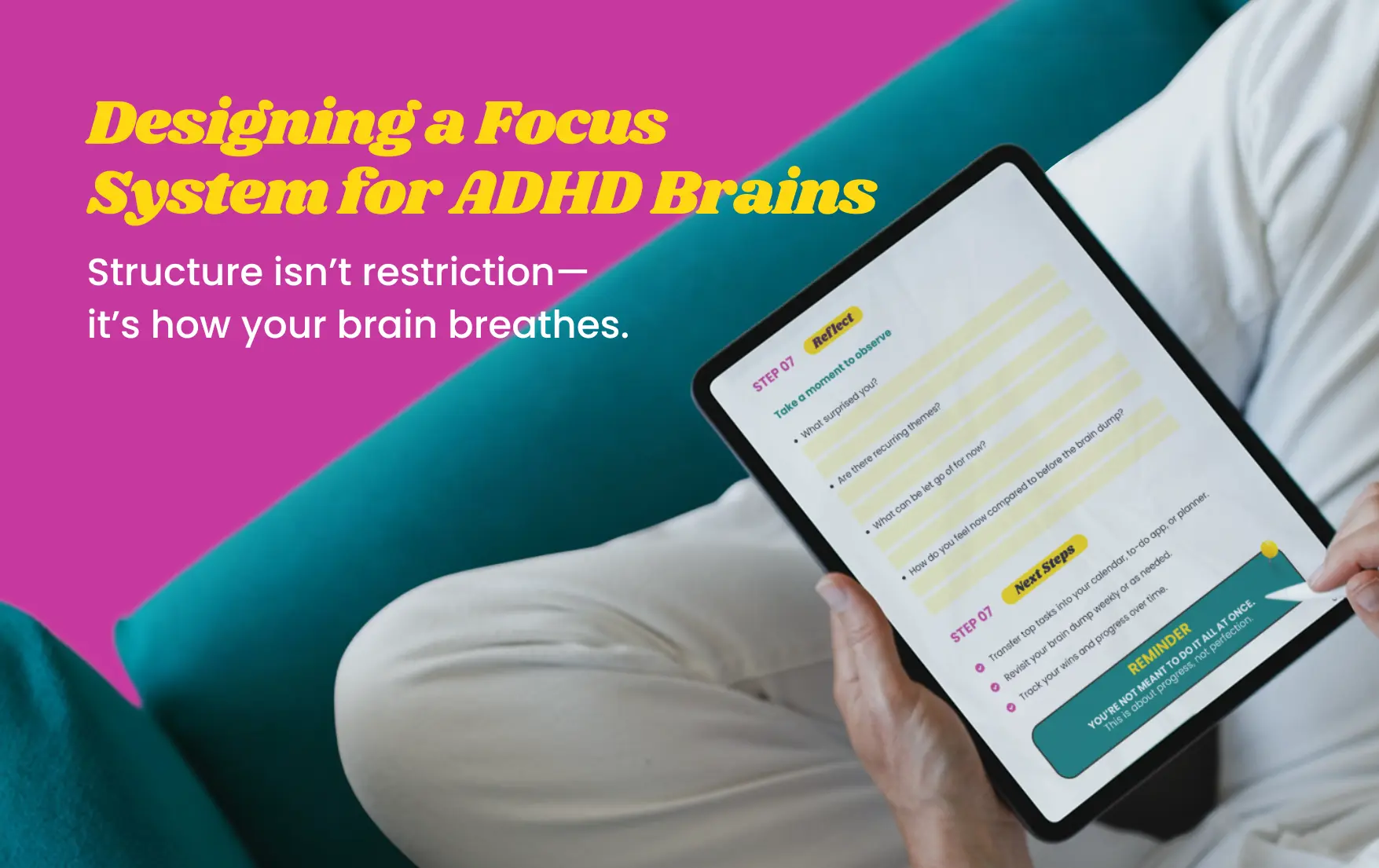
It’s about designing a focus system that works with your brain—not against it.
In this post, I’ll walk you through why traditional focus strategies often fail for ADHD brains, and how to build an ADHD-friendly ritual that actually helps you start, sustain, and finish the work that matters most.
Why Focus Isn’t a Personality Trait (or a Moral Issue)
Most people treat focus like a faucet—something you can just turn on when needed. But for ADHD brains, attention doesn’t work that way. It’s more like a fire that needs the right combination of spark, structure, and fuel to burn.
When I first launched AvyHD, I kept telling myself I just needed more grit. But despite being excited about the work, I’d often sit frozen in front of my laptop, unable to even start.
Research confirms this: people with ADHD often score lower on working memory, inhibition, and attention tests compared to neurotypical peers, meaning that challenges with task initiation are not about laziness but about executive function differences. Nature Reviews Psychology
In short: it’s not a lack of motivation—it’s often a mismatch between what your brain needs and what your environment gives it..
In plain terms?
It’s not that you’re unwilling. Your brain just needs better systems.
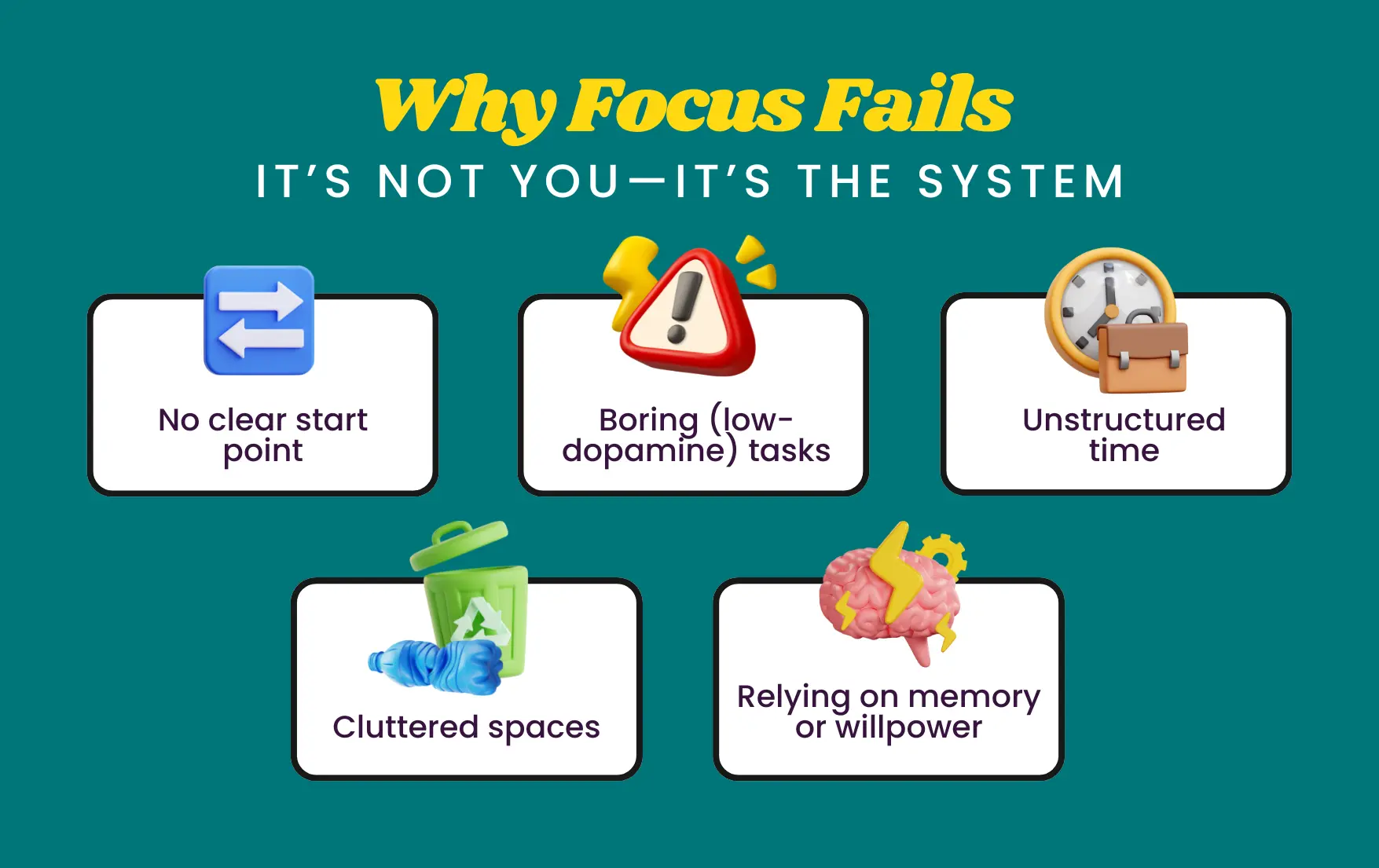
Here’s why focus often fails in ADHD brains:
❌ No clear entry point: “Where do I even start?”
❌ Low-dopamine tasks: “This feels pointless.”
❌ Unstructured time: “I’ll get to it later…” (You won’t.)
❌ Clutter: physical, digital, emotional
❌ Relying on memory or vibes instead of cues
This is why ADHD focus systems must be built differently: softer, visual, and dopamine-friendly.
3 Tools to Support Focus with ADHD
You don’t need 12 productivity apps. You need a focus system that honors your neurodivergence and builds from your real-world energy and rhythm.
Here’s what we teach inside the F.O.C.U.S. Frame at AvyHD:
1. Visual Workflows = Structure You Can See
Before I had a visual board, everything lived in my head—or worse, 14 scattered tabs. My anxiety was high, and my output? All over the place.
The day I set up a Trello board with just three columns—Inbox → In Progress → Done—I felt like I could breathe again.
Visual workflows help with:
- Reducing decision fatigue
- Making task progress tangible
- Helping your ADHD brain build task initiation momentum
When we talk about ADHD focus systems, visual tools aren’t just pretty—they’re powerful. For example, a systematic review (Thomas & Karuppali, 2022) found that using visual activity schedules in children with ADHD improved on-task behaviors, schedules, and transitions. ResearchGate These kinds of visual workflows reduce overwhelm by making the path forward visible—helping unblock the start of tasks and sustain consistency over time.
Whether it’s Notion, ClickUp, a whiteboard, or sticky notes, your neurodivergent workflow needs to be something you can actually see and interact with.
2. Dopamine-Friendly Task Design
Let’s be honest: Some tasks just don’t light up your brain. So, we stop blaming ourselves—and start building around it.
Inside our AvyHTea Time sessions, I help clients:
- Mix low-stimulation tasks with dopamine-rich quick wins
- Break big, boring tasks into small, satisfying actions
- Use sensory activation cues: music, color, movement
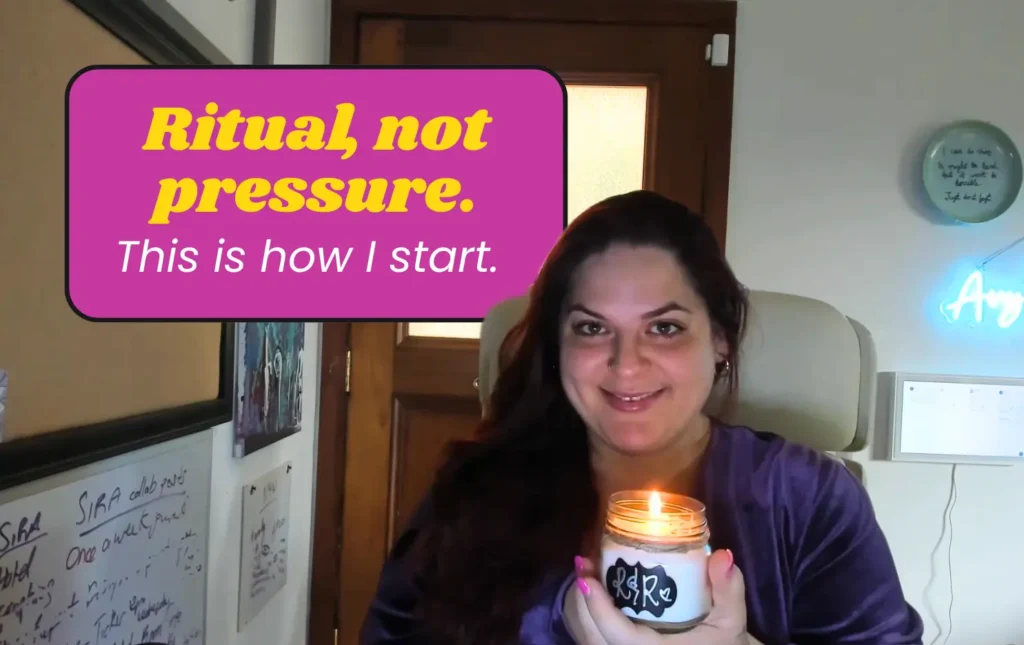
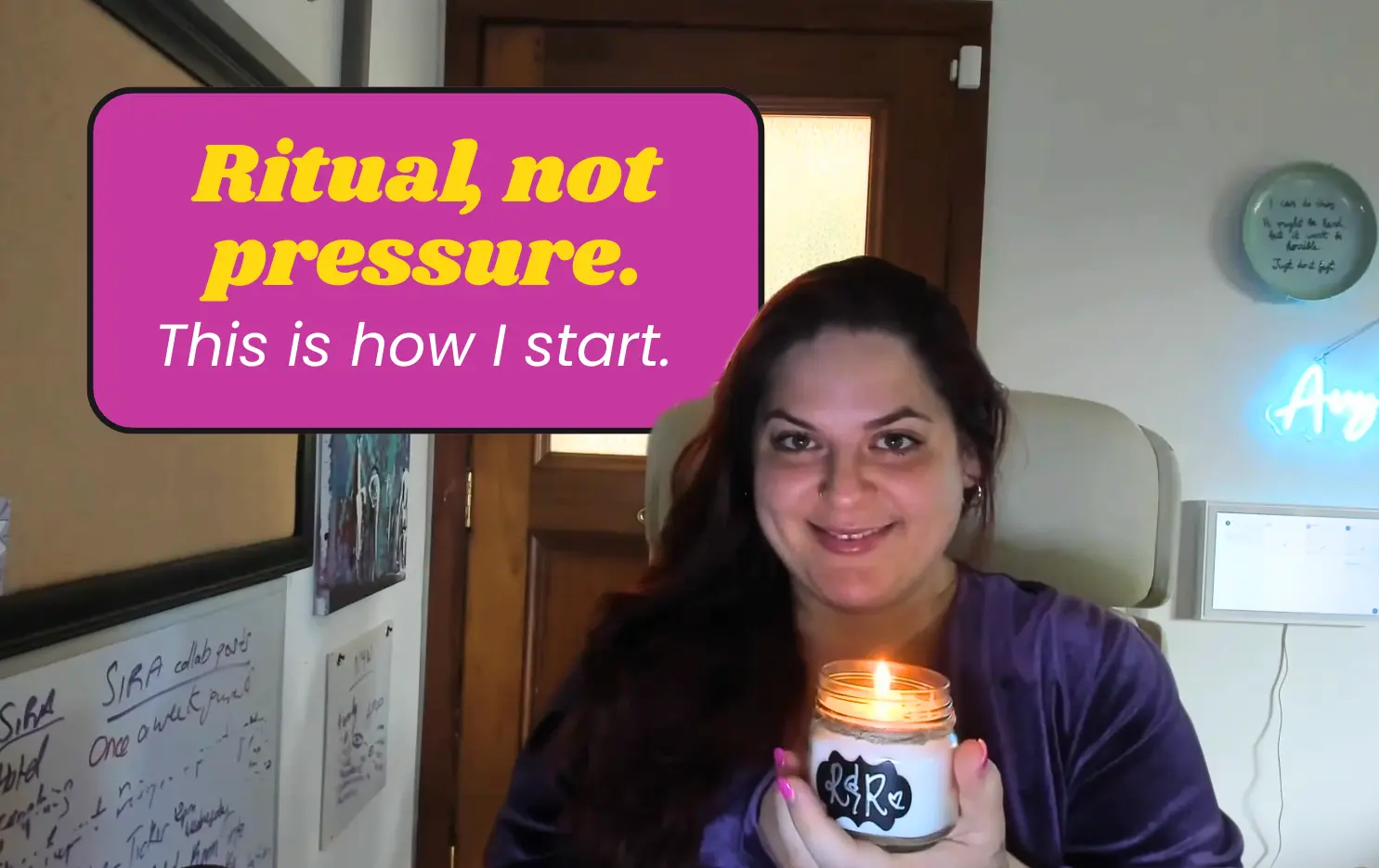
For me? I light a candle, hit a playlist I only use for work, and start with a 3-minute task.
That first win helps my brain stop resisting the work—and start flowing.
This isn’t about hacking your brain.
It’s about respecting what drives it.
👉 Book your AvyHTea Time here.
3. Time Blocking That’s Flexible, Not Forceful
Traditional time blocking always made me feel boxed in. Like I had to be a productivity robot with no margin for life.
That’s why I now use Focus Windows—time blocks with soft edges. Not rigid hours, just intentional space for deep work.
Here’s what a Focus Window includes:
- You know exactly what you’re doing (thanks, visual board)
- You have a clear start cue (music, breath, tea, stretch)
- You aim to move just one thing forward
According to a systematic review (Psychological Treatments in Adult ADHD: 2020), various psychological interventions—including personalized structuring of tasks and environment—have shown meaningful improvements in ADHD adults’ ability to initiate tasks and manage attention. SpringerLink
In other words: it’s not just about motivation or “trying harder”—it’s about having a system, cues, and structure that honor how your brain works.
This is how we go from chaos to rhythm. Not perfectly. But consistently.
How to Start Your Own ADHD Focus System
Start small. Make it yours. And don’t aim for perfect—aim for sustainable.
Here’s your starter pack:
- Set up a task capture system (Trello, Notion, notebook—whatever’s frictionless)
- Create columns: Inbox → Priority → In Progress → Done
- Build a soft focus ritual: 3 cues that help your brain shift modes
- Schedule 2–3 Focus Windows this week—your protected deep work time
- Delegate one task—to a VA, app, or automation tool
You’re not waiting for focus to magically arrive.
You’re designing a system where focus feels welcome.
🎧 Want to Learn the Full F.O.C.U.S. Framework?
📘 Watch our on-demand webinar:
👉 Watch the Replay – Design your custom ADHD focus system step-by-step
🎙️ Tune into the AvyHD Podcast:
👉 Subscribe on Spotify – Real tools, rituals, and stories from other neurodivergent entrepreneurs
Because attention isn’t about willpower.
It’s about creating a space where your brain can finally exhale.