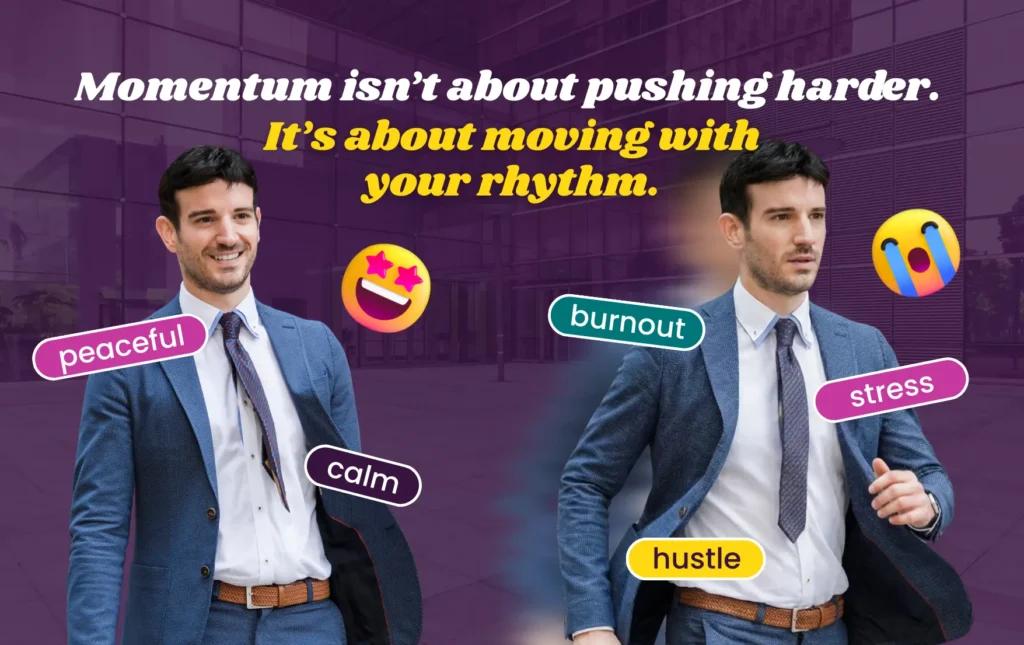
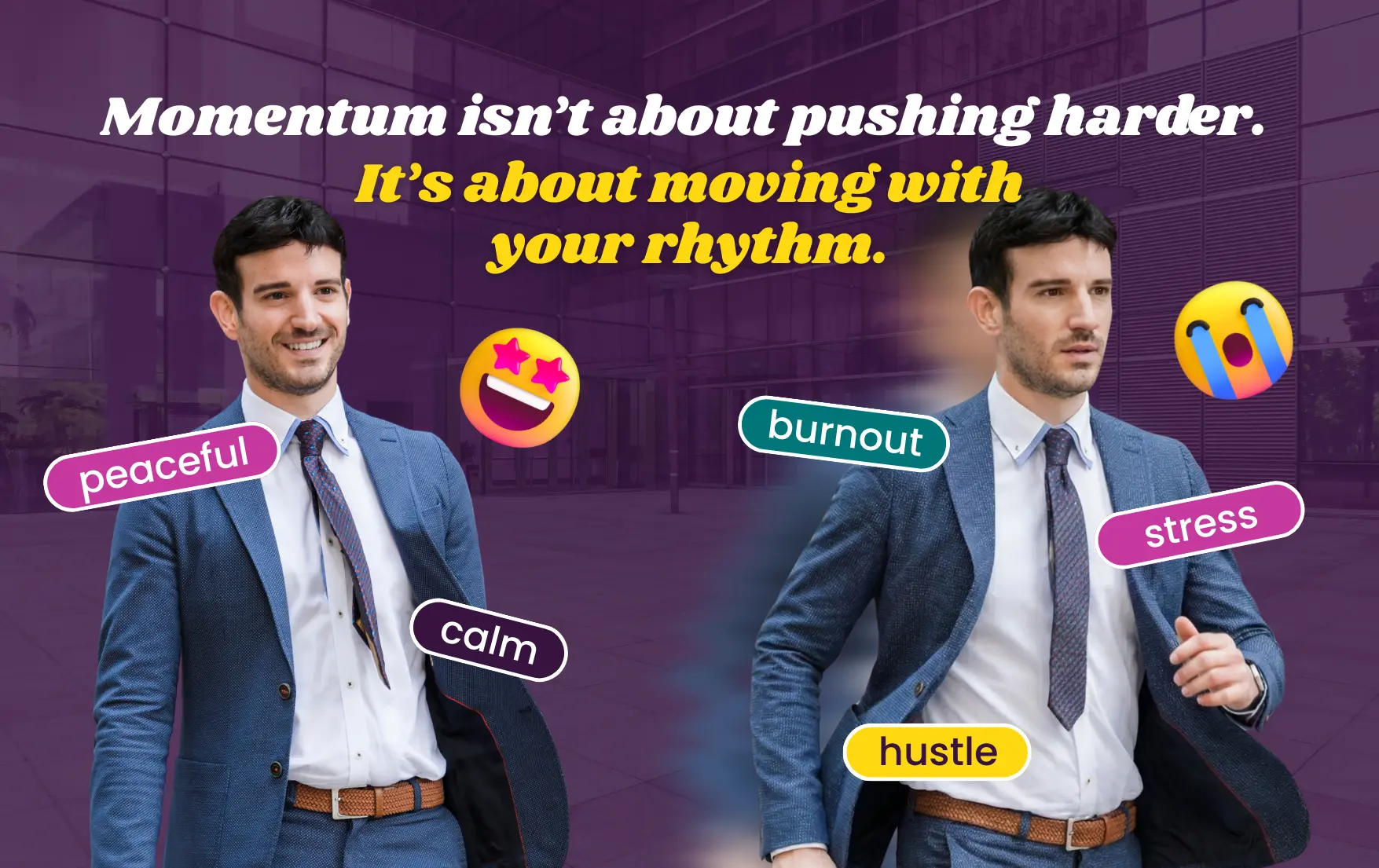
We live in a world that worships the grind. The faster you move, the more worthy you seem. But beneath the surface of high-speed hustle is a cycle that quietly wears us down.
The Productivity Crash
It always starts the same way: a burst of motivation, a clean slate, a fresh plan. You dive in—intense, focused, all in.
By day three, you’re tired. By day five, you’re behind. And then comes the crash. The guilt. The recovery. The pressure to start again.
This is the hustle loop: effort → exhaustion → shame → repeat.
But here’s the truth: you don’t need to hustle harder, you need to work with your nervous system, not against it.
Let’s talk about flow, and why it’s the key to consistent, sustainable progress.
What Flow Really Means (and Why It Matters)
Most people think “flow” means being wildly productive for hours at a time, lost in a zone of hyperfocus. But true flow is more grounded than that.
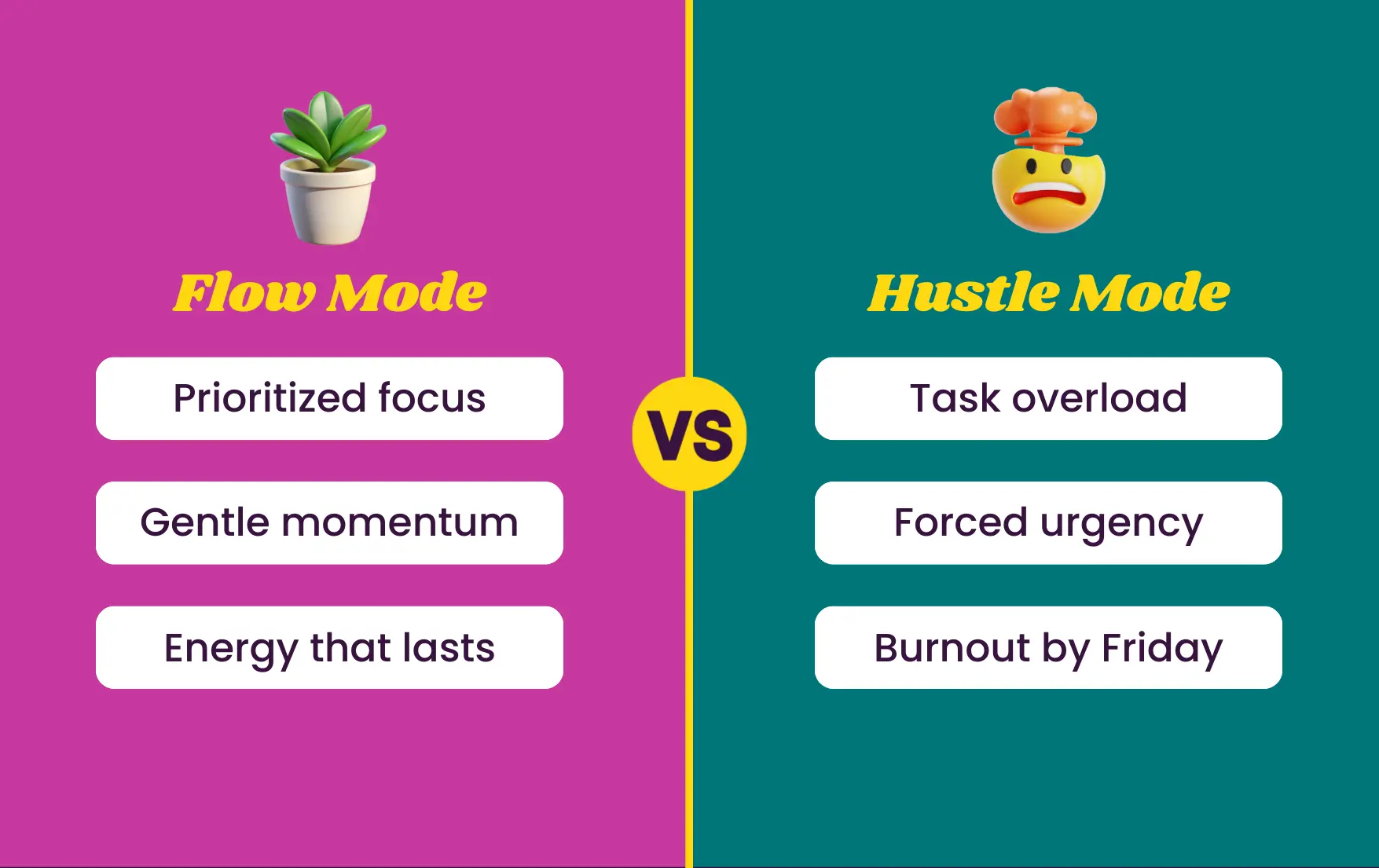
Flow is a regulated state of attention and engagement, where your nervous system feels safe, your focus is gentle, and your effort feels natural—not forced.
It’s not the same as adrenaline-fueled grind. It’s not white-knuckling through a to-do list. It’s a rhythm where your brain is fully online, your body is calm, and your energy is flowing toward what matters.
As I often say: “Momentum isn’t motivation, it’s regulation in motion.”
And the science backs it up. Neuroimaging studies show that flow activates task-specific neural pathways while reducing prefrontal over-control—meaning you’re focused without micromanaging yourself.
So what happens when we learn to choose flow over force?
How Flow Boosts Both Focus and Recovery
For neurodivergent minds, particularly ADHD brains, flow is a game changer. Not because it pushes harder, but because it supports smarter.
We thrive on dopamine, but the hustle cycle delivers it in spikes—intense, unsustainable bursts that crash hard.
Flow delivers dopamine steadily, helping maintain both creative momentum and the ability to recover without collapse.
According to a 2022 review of the neuroscience of flow:
“Flow states engage reward circuitry while conserving cognitive energy—supporting optimal attention and post-task restoration.”
(ScienceDirect – Neural Basis of Flow)
This is why flow feels good during the task, and why you’re not fried afterward.
Simple Rituals to Re-Enter Flow After Interruptions
You won’t always stay in flow. Life interrupts. Focus slips. But here’s the beauty: flow can be re-entered, gently and intentionally.
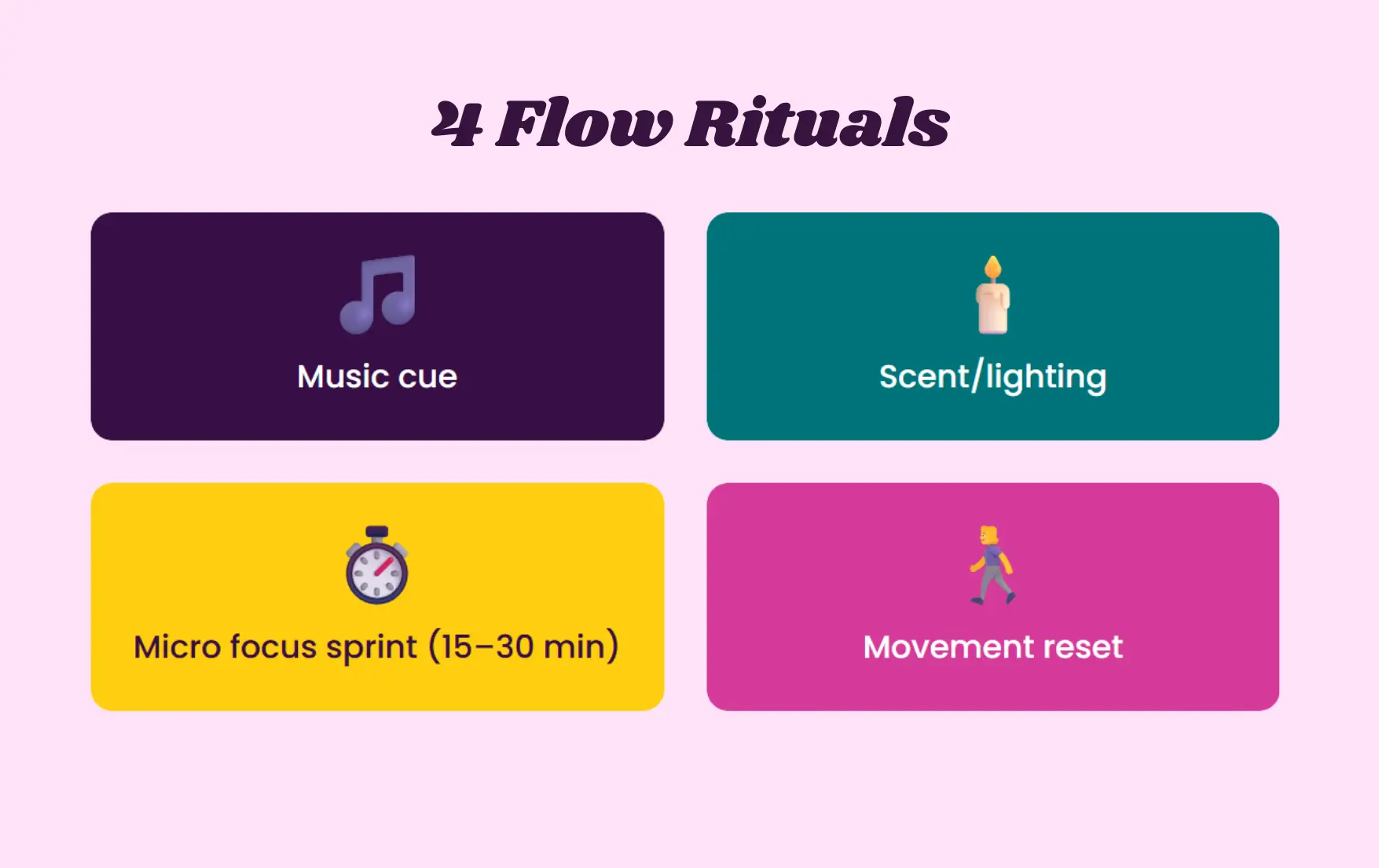
Here are 3 simple rituals to help you return to rhythm when you’ve been knocked off course:
1. 🔁 Movement Reset
- Take a 2-minute walk, stretch your arms wide, or splash your face.
- The physical shift helps your brain transition back to presence.
2. ⏱️ Micro-Focus Sprint
- Set a timer for 15–30 minutes and commit to one clear task.
- Keep it small and winnable, this rebuilds trust.
3. 🎧 Sensory Grounding
- Use music, scent, or lighting to cue your brain: We’re here now.
- For example, the same playlist each time you sit down to write.
And just as important as re-entry? Recovery. Don’t only plan how to focus, plan how to unwind. Make rest part of your workflow, not something you “earn” at the edge of burnout.
Why Rest Is a Productivity Tool
Let’s get something straight: rest isn’t weakness, and it’s not optional. It’s not something you “earn” by finishing the list. It’s something you build into the list—because it fuels the very work you want to sustain.
Most people treat rest like an afterthought. They squeeze it in once their body collapses or their brain fogs beyond repair. But by then, it’s not rest. It’s recovery. And recovery costs more than rest, mentally, physically, emotionally.
In a flow-based system, rest is proactive. It’s scheduled with the same intention as a work sprint or a creative session. It becomes part of the rhythm:
- You focus → you pause
- You create → you exhale
- You push → you replenish
This rhythm builds momentum you can trust—not just one you survive.
Try practicing the Recharge Rule: Schedule recovery before burnout hits.
That means booking a walk after a long call, building in buffer zones between tasks, or giving yourself a no-expectation evening on purpose—not just when you “deserve” it.
Think of rest like water for a plant. You don’t wait until it wilts and withers. You water consistently so it can keep growing.
Rest is not the reward for finishing—it’s the resource that keeps you finishing.
So if you’re tired, that doesn’t mean you’re failing.
It means your body is asking to be part of the process. Let it be.
Let’s Talk About Flow
If you’re ready to bring more flow and less force into your business or creative process, let’s talk it through over tea.
AvyTea Time is a free, gentle 1:1 conversation where we’ll explore your rhythm, map your friction points, and find your next steps, without hustle.
Because you don’t need a new productivity hack. You need a rhythm that fits.
You don’t have to earn your progress through pressure.
You don’t have to grind yourself down to move forward.
Flow isn’t soft. It’s sustainable.
It doesn’t ask you to push harder, it asks you to pay attention.
And when you learn to listen to your rhythm,
Momentum will meet you there.