(And No, You Don’t Have to Turn It Into a Growth Story Yet)
Let’s start here.
Burnout does not automatically mean you were secretly on the edge of success.
It does not automatically mean you were about to “break through.”
It does not automatically mean this is part of some beautiful arc.
Sometimes — later — when there’s distance and nervous-system safety, people look back and realize:
“I was stretching.”
“I was expanding.”
“I was carrying more than I knew.”
But that meaning usually arrives in hindsight.
When you are still inside it — still exhausted, still foggy, still overwhelmed — it may not feel like growth at all.
It may just feel like pain.
And if you don’t see a silver lining right now, that’s okay.
You are not required to interpret your suffering optimistically in order for it to be valid.
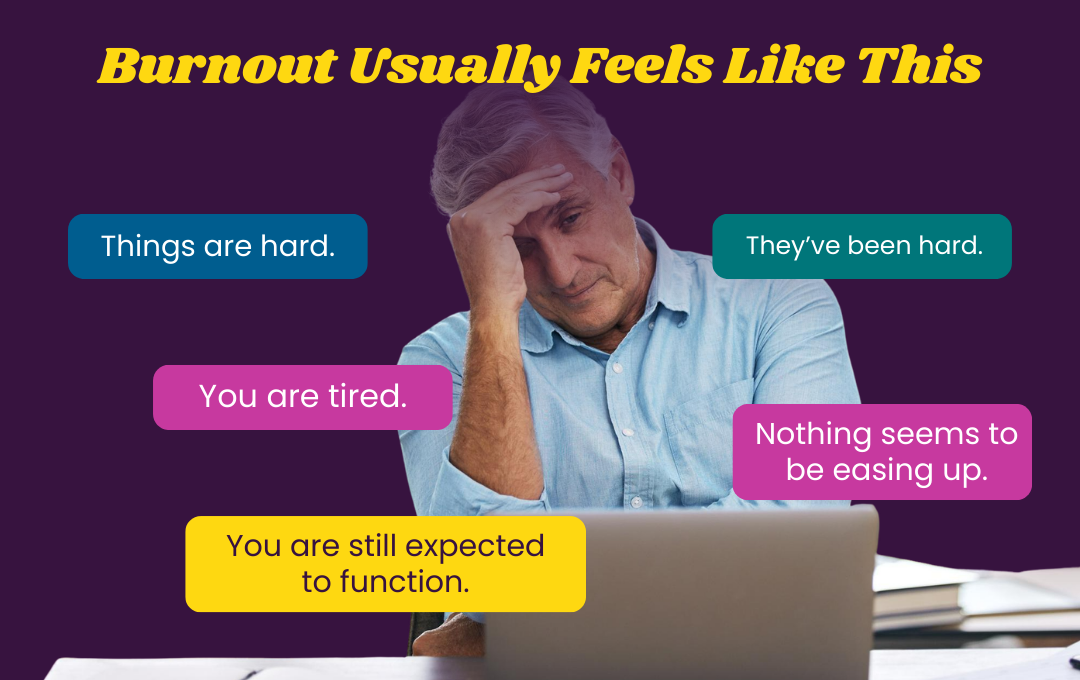
Burnout Usually Feels Like This
Not cinematic.
Not transformational.
Not poetic.
It feels like:
- Things are hard.
- They’ve been hard.
- You are tired.
- You are still expected to function.
- And nothing seems to be easing up.
- Things are hard.
There is pressure.
There is cognitive noise.
There is dread.
There is self-questioning.
There is the quiet fear that maybe you just can’t handle what other people seem to.
That experience does not need to be reframed into something inspirational.
It needs to be understood.
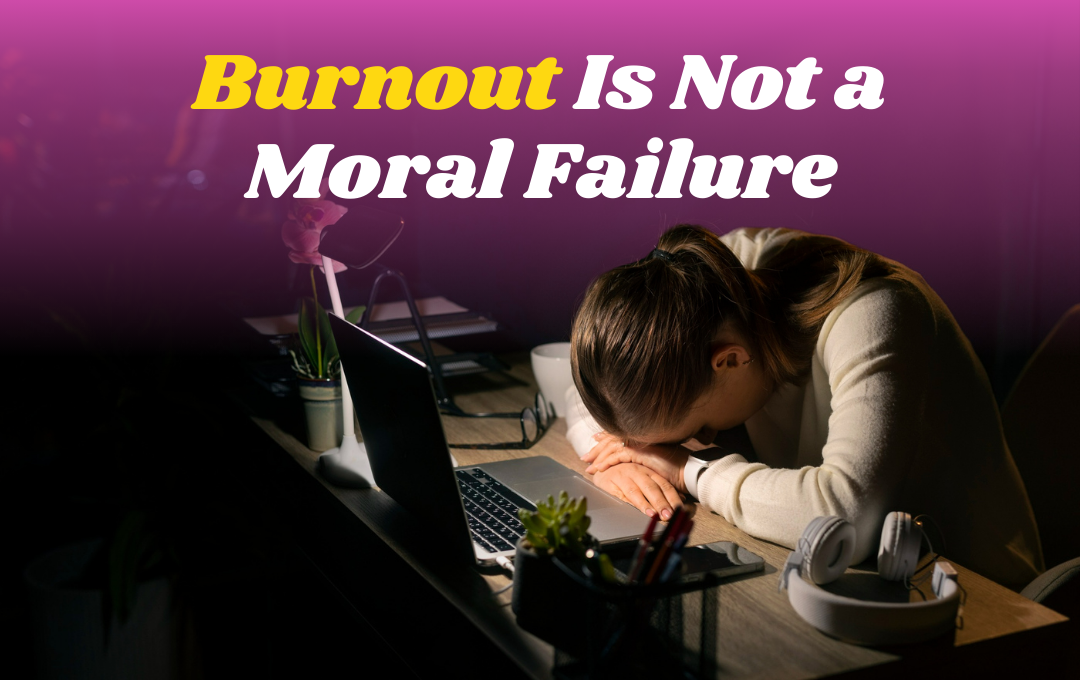
Burnout Is Not a Moral Failure
One of the most damaging narratives around burnout is this:
“If I were stronger, more disciplined, more grateful, I wouldn’t be here.”
That story feels convincing because it gives you control.
If it’s your fault, you can fix it.
But burnout is not a character assessment.
Burnout happens when sustained demand exceeds protected capacity.
That’s it.
Demand can look like:
- High workload
- Emotional labor
- Financial pressure
- Instability
- Caregiving
- Visibility
- Conflict
- Chronic uncertainty
- High workload
It doesn’t have to be glamorous.
It doesn’t have to be tied to success.
It doesn’t need a silver lining.
It is prolonged strain without enough structural or emotional buffering.
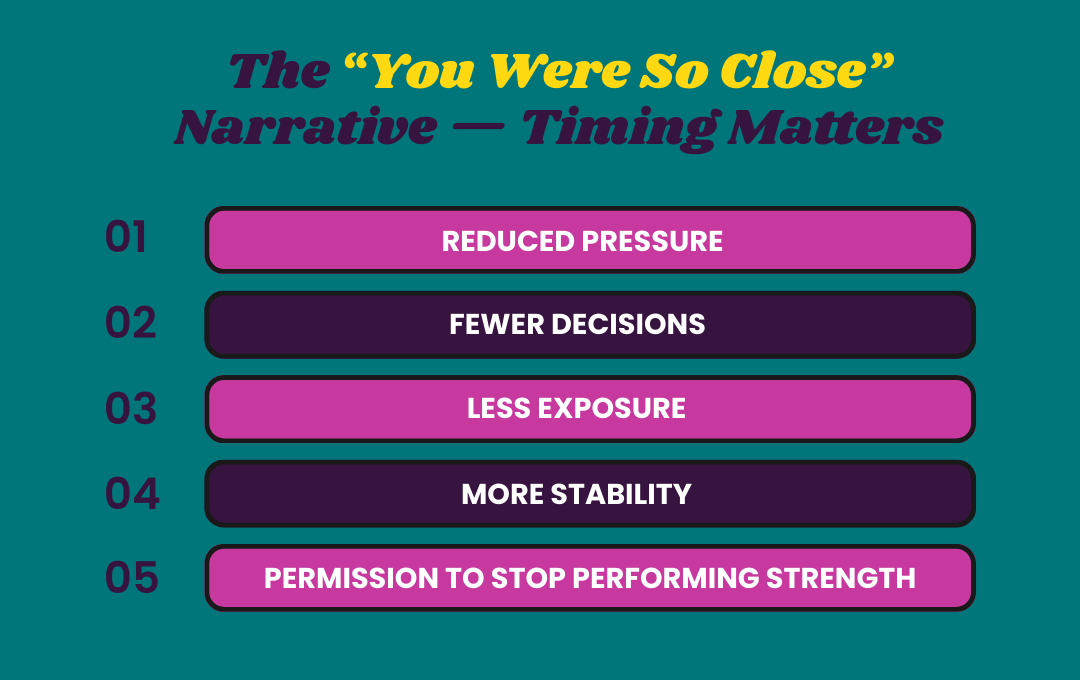
The “You Were So Close” Narrative — Timing Matters
There are moments when burnout does follow growth.
There are moments when expansion outpaces support.
There are moments when someone was building something bigger than their system could sustainably hold.
But that interpretation belongs to the recovery phase — not the collapse phase.
Telling someone in active burnout that this is secretly growth often feels invalidating.
When you’re in it, you don’t need meaning.
You need:
- Reduced pressure
- Fewer decisions
- Less exposure
- More stability
- Permission to stop performing strength
- Reduced pressure
Anything else can feel like toxic positivity dressed up as resilience.
Especially for Neurodivergent Founders
If you are neurodivergent, burnout can feel even more destabilizing.
You may already be:
- Masking effort
- Overcompensating
- Managing sensory overload
- Carrying high cognitive load
- Working harder internally than anyone sees
- Masking effort
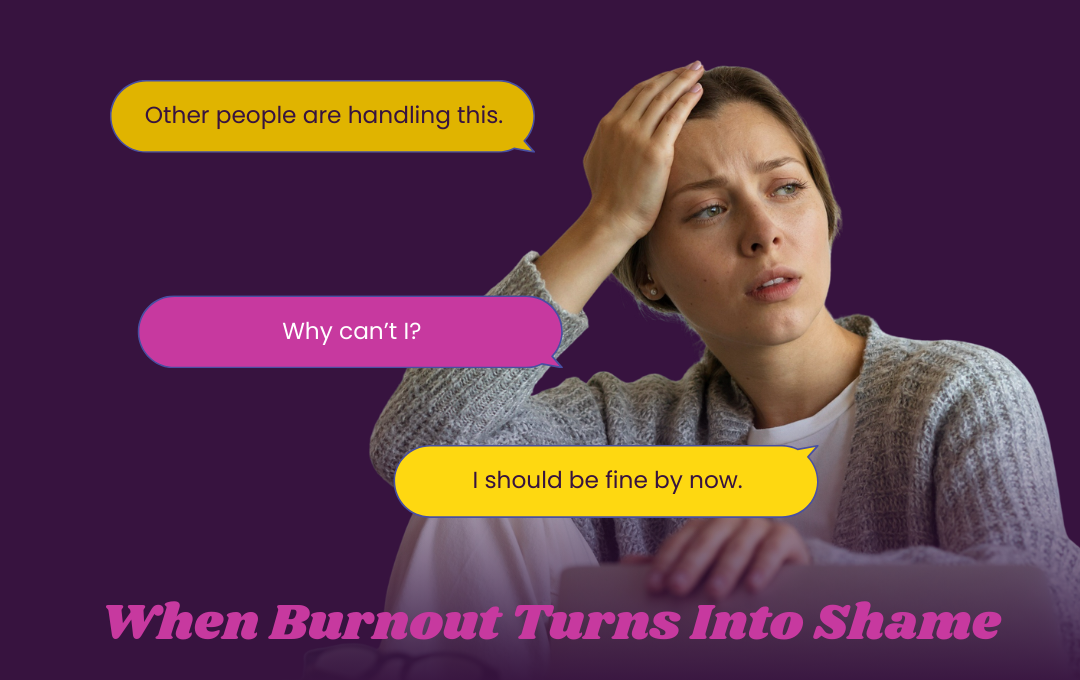
So when burnout hits, the shame compounds.
“Other people are handling this.”
“Why can’t I?”
“I should be fine by now.”
That thought — “I should be fine by now” — is not clarity.
It’s stress talking.
Self-criticism often shows up when your system is overloaded. It’s an attempt to regain control.
But punishing yourself does not increase capacity.
It increases threat.
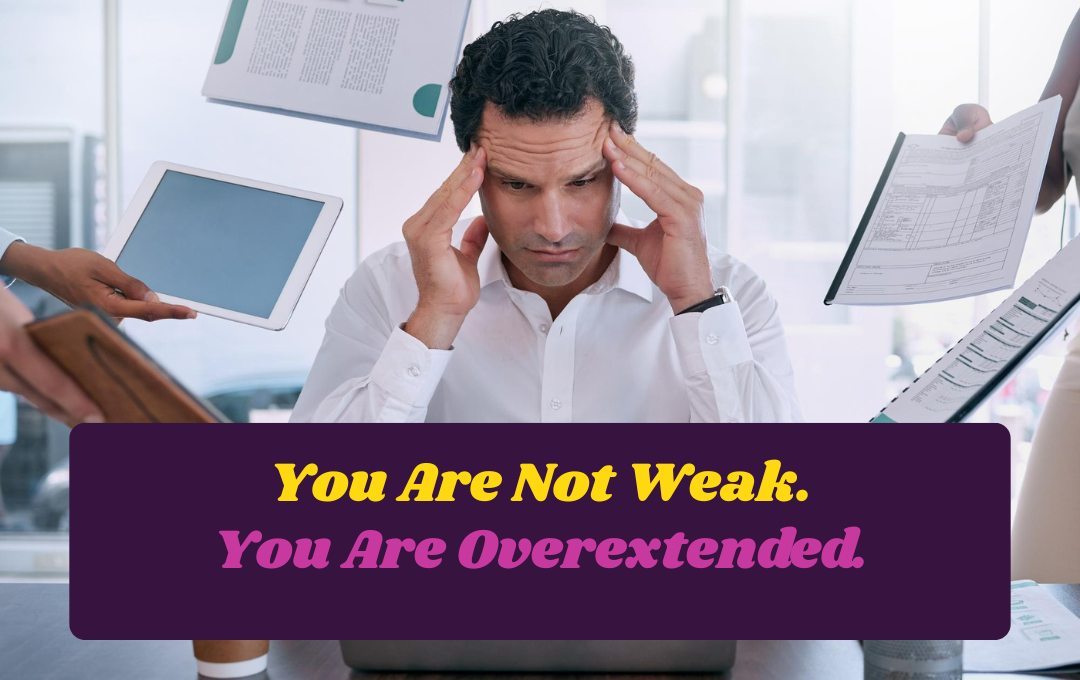
You Are Not Weak. You Are Overextended.
Burnout is not proof you weren’t built for this.
It is proof something required more than your system could sustainably hold.
That might mean:
- Too much decision density
- Too much emotional absorption
- Too little support
- No recovery buffers
- No margin for fluctuation
- Too much decision density
It does not mean you are defective.
It means the load exceeded protection.
There is nothing romantic about that.
There is just information.
No Reframe Required (Yet)
If you are in burnout right now:
You do not need to make it meaningful.
You do not need to see the lesson.
You do not need to be grateful for it.
You do not need to grow from it.
You need less.
Less pressure.
Less expectation.
Less self-judgment.
Less pretending you’re fine.
In the next piece, we’re going to talk about why the pressure to “bounce back” often makes burnout worse — and why doing less, not more, is what actually stabilizes recovery.
For now, this is enough:
You are not broken.
You are burned out.
And that says something about the load — not your worth.
If this helped you feel even slightly less alone, there is a gentle starting point called The Resilience Reset.
Not a performance plan. Not a productivity push.
Just a place to land.
Only if and when it feels supportive.