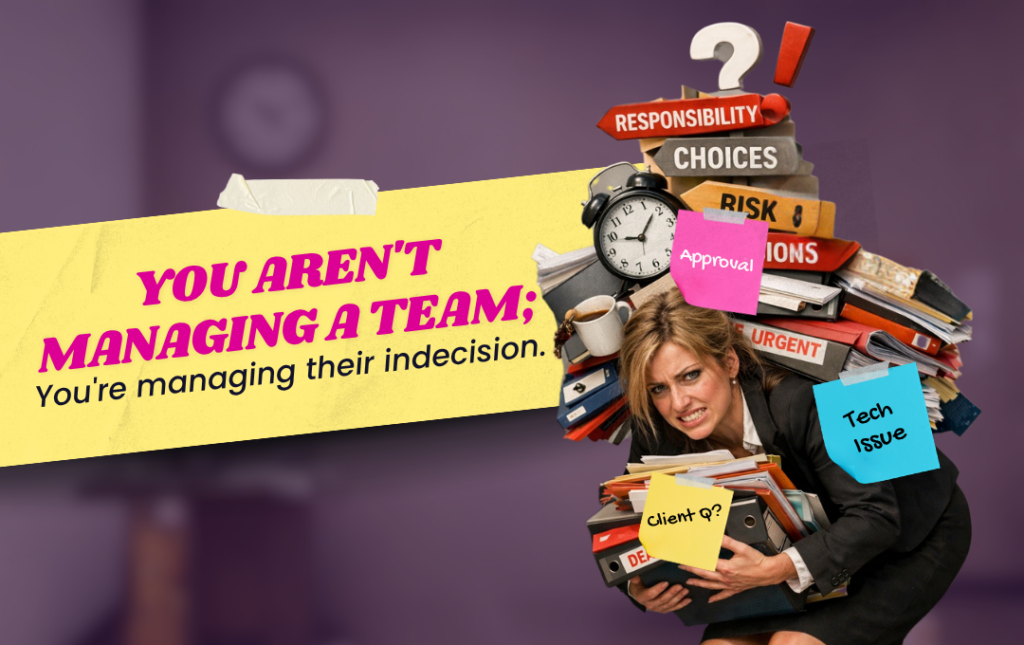
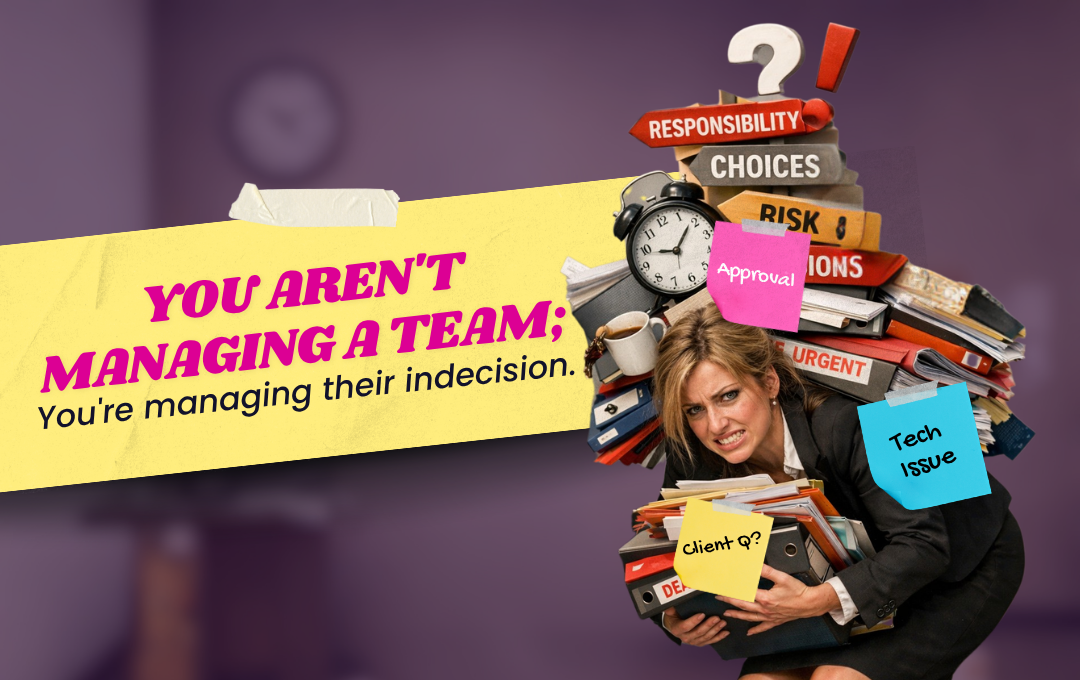
If every problem in your business eventually lands back on your desk…
It doesn’t mean you’re a bad delegator. (Well, it might mean you’re a bad delegator.)
And it doesn’t mean your team is incompetent. (Wellll…)
It usually means something much simpler.
Your structure is routing every decision back to you.
Founders often assume the pressure they feel is part of leadership. That being responsible for everything is the price of building a company.
But most of the time, what they’re experiencing isn’t leadership.
It’s a founder bottleneck. And bottlenecks aren’t personality problems. They’re design problems.
- The founder bottleneck happens when decision ownership is unclear
- Teams escalate decisions when they don’t know what they’re allowed to decide
- When every issue routes back to the founder, growth slows dramatically
- Bottlenecks create burnout and erode team confidence
- Clear decision rights distribute responsibility and restore leadership focus
Picture a normal workday for a growing business.
A team member has a client question. They message the founder.
Another team member isn’t sure how to prioritize a task. They message the founder.
A client wants to make a small change. They message the founder.
None of these are big decisions. But they all land in the same place.
By lunchtime the founder has answered twenty “quick questions.” By the end of the day they’re exhausted. And none of the strategic work they planned actually happened.
This is the founder bottleneck.
The Decision Escalation Trap
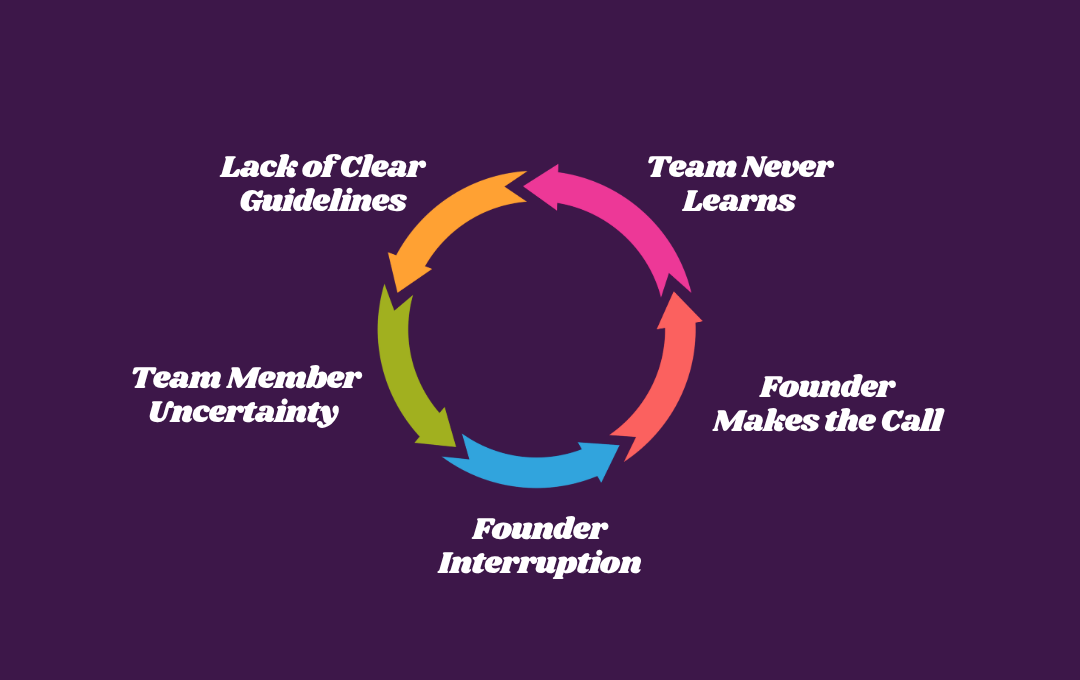
Teams escalate decisions for a simple reason. They don’t want to make mistakes.
When ownership and authority are unclear, escalation feels like the safest option. So instead of deciding, people ask.
“Is this okay?” “Should we do it this way?” “What do you want us to do here?”
Each question seems small. But collectively they reorganize the entire company around the founder’s attention.
The founder becomes the default decision layer. Not because they demanded control — because the structure quietly routes everything back to them.
Why “Just Empower Your Team” Doesn’t Work
Founders are often told the solution is simple. “Empower your team.”
That advice sounds great. It’s also incomplete.
People cannot make decisions they’re not authorized to make. And they won’t take responsibility for outcomes they don’t own.
Empowerment without structure doesn’t create independence. It creates confusion. And confusion always leads to escalation. Which means the founder ends up deciding anyway.
The founder bottleneck isn’t caused by control. It’s caused by unclear decision design.
The Cost of Being the Bottleneck
At first, founders tolerate this pattern. It feels responsible. Helpful. Even necessary.
Over time the cost becomes impossible to ignore.
Growth slows. Work moves at the speed of one person’s attention. Projects pause waiting for answers. Opportunities stall waiting for approval. The business cannot grow faster than the founder can think.
Burnout increases. Decision-making is mentally expensive. Even small decisions require context, attention, and judgment. Founders trapped in the bottleneck can make hundreds of decisions per day — most of which shouldn’t belong to them at all.
Teams stop thinking independently. When decisions always flow upward, people stop deciding. Stop experimenting. Stop taking initiative. The organization becomes dependent on a single decision-maker, which reinforces the bottleneck even more.
Leadership vs Control
Many founders worry that releasing decisions will create chaos.
But leadership isn’t about personally making every decision. It’s about designing systems where decisions can happen without you.
Early-stage companies require founder control. Scaling companies require decision distribution.
Boundaries make that shift possible. They clarify who owns decisions, what authority people have, and when escalation is actually appropriate.
Without those rules, every decision drifts upward. Every time.
Designing Decision Rights
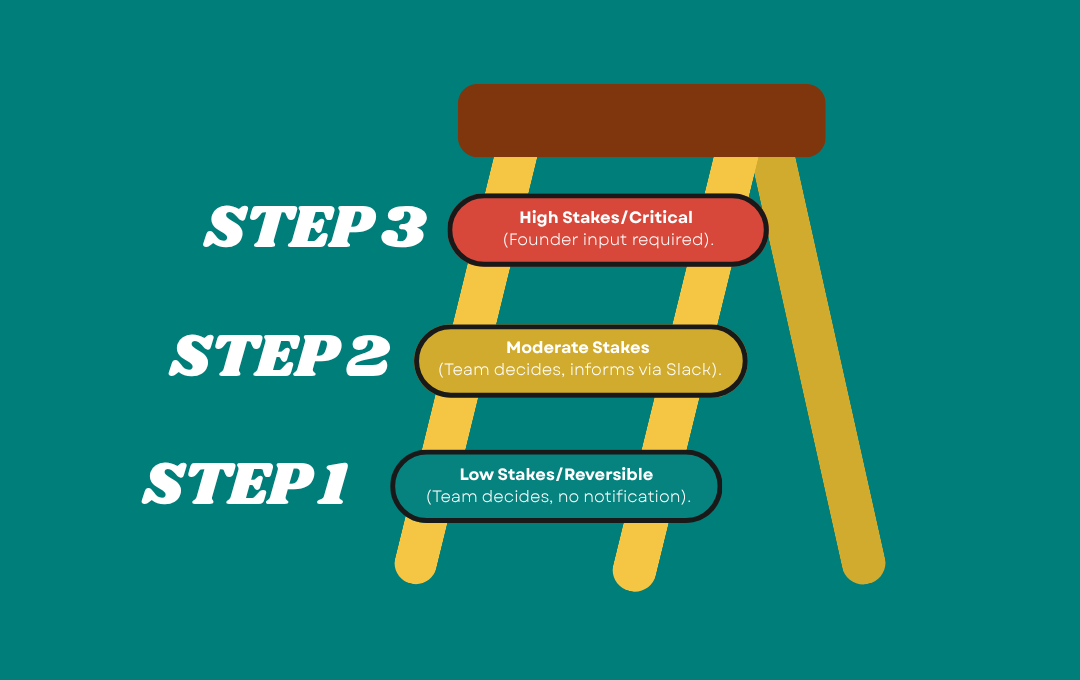
The most effective way to break the founder bottleneck is defining decision rights.
Decision rights answer one simple question: who decides what?
Client Communication Team decides: scheduling updates, routine responses, project coordination. Founder decides: contract changes, pricing adjustments, strategic partnerships.
When this is clear, clients stop finding the fastest path to you. Because there isn’t one.
Project Execution Team decides: workflow steps, internal timelines, implementation details. Founder decides: project direction, major scope changes, resource allocation.
When this is clear, projects move without you in the middle of every conversation.
Operational Issues Team decides: routine problems, cross-team coordination. Founder decides: policy changes, major financial commitments.
When this is clear, the daily noise that was eating your mornings stops reaching you entirely.
For ADHD entrepreneurs, this is especially critical because interruptions and constant switching destroy focus fast. Clear structures reduce unnecessary escalation and protect cognitive energy.
Boundary Infrastructure
Decision rights alone aren’t enough.
They need to live inside a broader system of business boundaries that define task ownership, communication expectations, escalation paths, and delegation structures.
Once these exist, responsibility distributes naturally across the organization. The founder stops being the operational decision center. The company becomes far more resilient.
Quick Diagnostic
- Do team members frequently ask for approval before acting?
- Do small operational issues reach you daily?
- Do projects pause while waiting for your decisions?
- Do you review work that should already be finished?
If several of these land — it’s not a leadership failure. It’s a structural signal that decision ownership needs redesign.
Final Insight
Most founders believe their job is to solve problems.
But sustainable leadership requires something different.
Your job is not to solve every problem. Your job is to design a business where problems get solved without you.
Because when every decision returns to the founder, the company stops growing.
If your business still routes every decision back to you, the problem is usually structural. A Strategy Call with Avy (me 😉) can help identify where decision ownership, delegation systems, and leadership boundaries need to shift — so your company can grow without depending on you for every answer.