

One of the most exhausting parts of running a business rarely appears on a task list.
It’s not the meetings. It’s not the deliverables. It’s not even the deadlines.
It’s emotional labor.
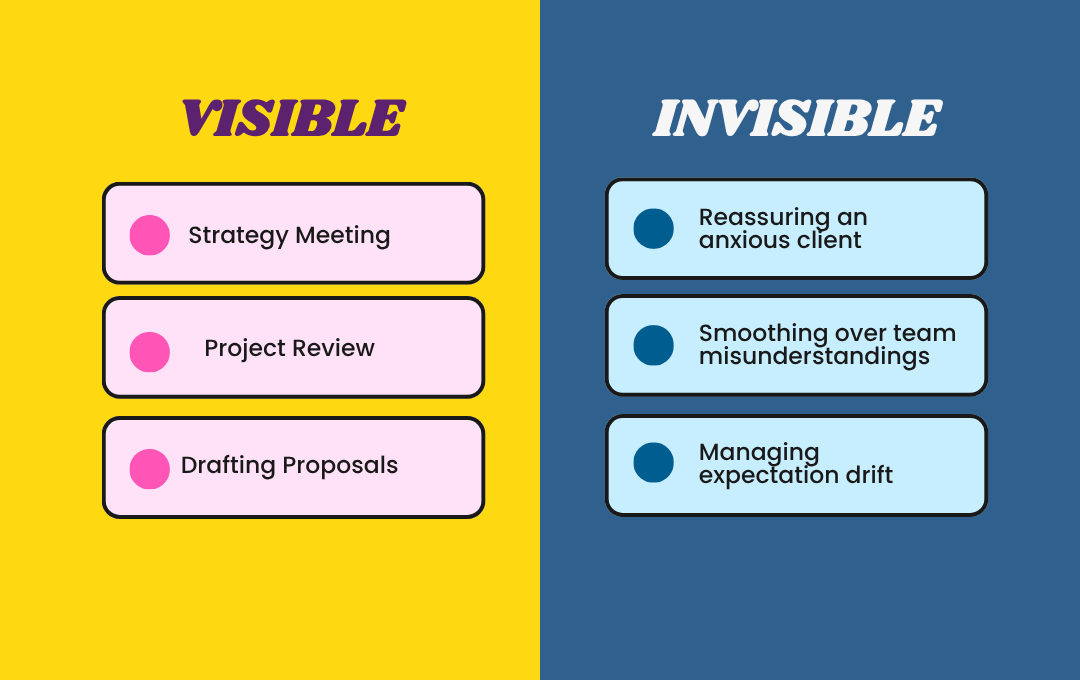
Managing expectations. Reassuring clients. Smoothing misunderstandings. Keeping everyone calm when something goes sideways.
None of this appears in the project plan. But it quietly consumes an enormous amount of leadership energy.
And for many founders, it’s one of the biggest hidden drivers of burnout.
- Emotional labor includes reassurance, conflict mediation, and expectation management
- Founders carry this burden when business boundaries are unclear
- Invisible emotional work creates exhaustion even when workloads appear manageable
- Clear operational systems reduce emotional tension dramatically
- Leadership boundaries distribute emotional responsibility across the business — instead of concentrating it on you
Let me paint you a picture of a completely normal founder afternoon.
A client is anxious about project progress. A team member feels uncertain about feedback. Another client interpreted a message differently than intended.
None of these are operational problems. They’re emotional ones.
So you step in. You clarify the situation. Reassure the client. Smooth the tension.
By the end of the day you feel completely drained. But if someone asked what you accomplished — there’s nothing obvious to point to. No deliverable. No completed project.
Just a day spent stabilizing everyone else’s feelings.
That’s emotional labor. And you’re probably carrying way more of it than you realize.
What Emotional Labor Actually Looks Like
Emotional labor is the work of managing the emotional climate around a project or relationship. It shows up in subtle ways. Most founders perform it constantly without recognizing the cost.
Reassurance. Clients want confirmation that everything is fine — even when it obviously is. “Are we still on schedule?” “Is everything okay?” “Can you walk me through this again?” The information already exists. But reassurance still requires your attention and emotional presence. Without clear communication systems, these requests multiply fast.
Conflict mediation. A message sounds sharper than intended. Feedback lands harder than expected. Expectations drift. The founder steps in to interpret, clarify, calm, and redirect. Relationships stay intact — but the founder becomes the emotional shock absorber for the entire business.
Expectation smoothing. When scope, timelines, or responsibilities are unclear, tension appears. Someone has to translate the expectations, soften the difficult conversations, and prevent minor problems from becoming major ones. That someone is almost always the founder.
Why Founders End Up Carrying This
Emotional labor concentrates around founders for two reasons. One is noble. One is uncomfortable.
Empathy. Most founders genuinely care about their clients and teams. That empathy builds strong relationships. But empathy without boundaries turns into emotional over-responsibility fast. The founder becomes the person who manages everyone’s stress. Over time, that load becomes unsustainable.
Ego. The part nobody likes to talk about. Sometimes founders reinforce emotional labor because being needed feels good. You become the stabilizer. The problem solver. The one who holds everything together.
But if you’re not careful, that dynamic feeds something that quietly breaks your business.
The business becomes dependent on your emotional presence. It cannot function smoothly without you in the middle of every tension point. That’s not leadership. That’s dependency. And dependency doesn’t scale.
Why It’s So Draining
Unlike operational work, emotional labor rarely ends.
You can complete a report. You can finish a project. But emotional tension constantly regenerates when systems are unclear.
Over time it creates three specific forms of fatigue.
Emotional fatigue. Constantly managing other people’s concerns requires sustained empathy. Even positive interactions drain cognitive energy. Founders often feel exhausted without understanding why.
Decision fatigue. When emotional responsibility accumulates, even small decisions feel heavier. Every choice feels like it might affect a relationship. Leadership slows down.
Reduced strategic thinking. Emotional stabilization pulls attention away from strategy. Instead of designing the future of the business, the founder spends their energy maintaining the emotional equilibrium of the present. That’s not a sustainable leadership role.
Boundaries Reduce Emotional Labor
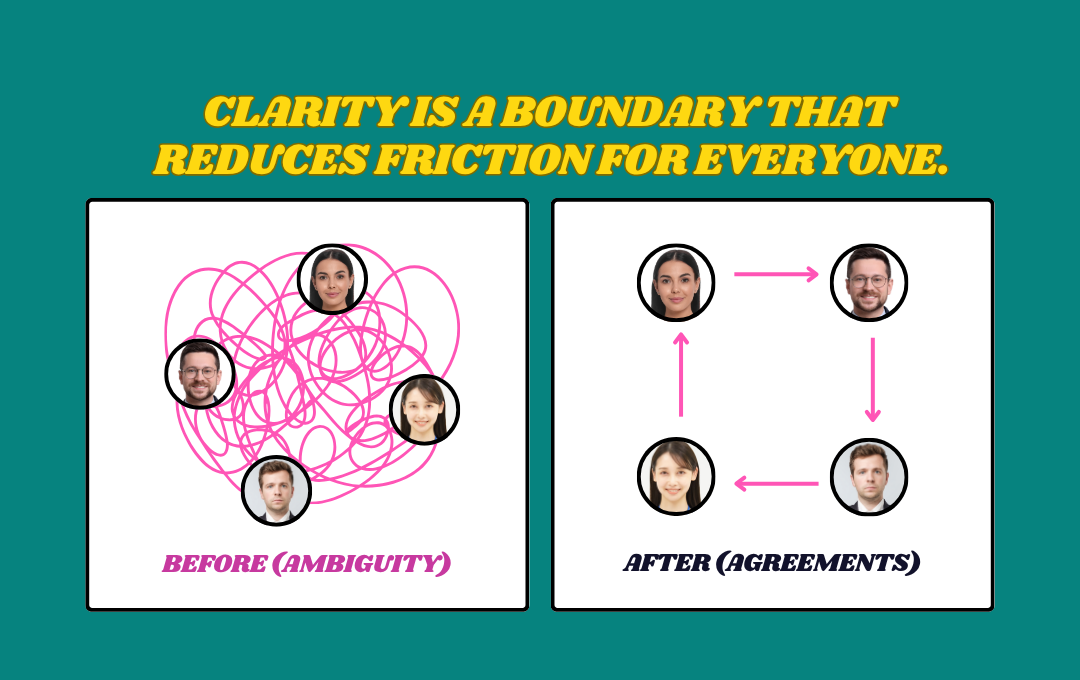
The most effective way to reduce emotional labor is operational clarity.
When expectations are visible, tension drops dramatically.
Communication systems mean clients know where updates will appear, when responses should be expected, and how to submit requests. Reassurance requests drop dramatically when people aren’t left guessing.
Scope boundaries mean conflicts about “what was included” decrease. Less ambiguity means fewer emotional negotiations.
Decision ownership means issues get resolved where the work happens. Problems stop escalating emotionally upward. Instead of the founder stabilizing every interaction, responsibility distributes across the organization.
Quick Diagnostic
- Do clients frequently need reassurance about work already underway?
- Do team misunderstandings regularly require your intervention?
- Do you spend time rewriting communication to prevent conflict?
- Do you feel emotionally drained even on light workdays?
If several of these land — emotional labor may be draining more leadership energy than you realize.
Final Insight
Many founders assume burnout comes from working too much.
But a large portion of leadership fatigue comes from invisible emotional work.
When expectations are unclear, someone has to manage the tension. In most businesses, that someone becomes the founder.
And if you’re being honest with yourself — part of you might even enjoy being the one everyone depends on.
But sustainable leadership requires something different. Not emotional centralization. Structural clarity.
Because when boundaries are clear, emotional pressure spreads across the system instead of concentrating on one person.
The Boundary Leak Audit will show you exactly where communication systems, delegation structures, and business boundaries need strengthening — so emotional labor stops being invisible and starts being solvable.
