

Most founders don’t struggle with boundaries because they lack discipline.
They struggle because their success was built on being helpful and available.
Early in a business, responsiveness feels like leadership. You answer quickly. You solve problems. You jump into every situation.
Clients appreciate it. Opportunities grow. Revenue increases.
But eventually something shifts.
Availability stops being a kindness. It becomes an expectation.
And suddenly saying “no” feels much harder than it should.
- Many founders struggle with boundaries because early success rewards availability
- Over time, responsiveness turns into assumed access
- Boundaries don’t reject clients — they define how work happens
- Without systems, founders accidentally train clients to rely on them
- Sustainable leadership replaces people-pleasing with structure
A client sends a message late in the day.
“Can you just take a quick look at this?”
It’s not technically part of the project. But saying yes feels easier than pushing back. So you handle it.
Then it happens again. Another quick request. Another small favor.
None of these moments seem significant. But over time they reshape the relationship.
Your client learns something important: you are always available.
And once that expectation exists, saying no feels uncomfortable. Because you created it.
The Social Conditioning Behind People-Pleasing
Most founders don’t realize where their boundary problems begin.
They start during the early stages of building a business.
When you’re trying to land your first clients, flexibility is survival. You adapt quickly. You go the extra mile. You respond immediately.
And it works. Clients feel supported. Relationships deepen. The business grows.
But the same behavior that helps a business start quietly undermines it later.
Because responsiveness slowly becomes assumed access.
Success Reinforces the Pattern
Here’s the tricky part. Being helpful works.
Clients appreciate it. Projects expand. Revenue grows.
So your brain learns something powerful: being available equals being valuable.
But as the company grows, the volume of requests increases. More clients. More communication. More decisions.
And the behavior that once built the business starts draining your attention.
Yet changing the pattern feels uncomfortable. Because now saying no feels like disappointing someone.
The Ego Trap Founders Don’t Notice
Here’s where it gets uncomfortable.
Sometimes founders start resenting the access clients expect. “Why do they need me for everything?”
But here’s the truth: your clients didn’t invent that expectation. You trained them.
If you respond instantly, jump into every issue, and make yourself the center of every decision — clients learn that the fastest solution is going directly to you. That’s not manipulation. That’s behavioral conditioning.
And if we’re being honest, part of the reason you reinforce this pattern is because it feels good.
Being needed feels good. Being the problem solver feels good. Being the center of the operation feeds something real.
But a business that depends on you emotionally and operationally isn’t leadership. It’s dependency. And dependency doesn’t scale.
Don’t Turn Your Clients Into the Problem
There’s a dangerous moment that appears when boundaries are missing.
You become overwhelmed. Access becomes constant. And slowly the internal narrative shifts.
Clients stop feeling like opportunities. They start feeling like interruptions. Like drains.
That’s a warning sign.
Because your clients are not the problem. The structure of your business is.
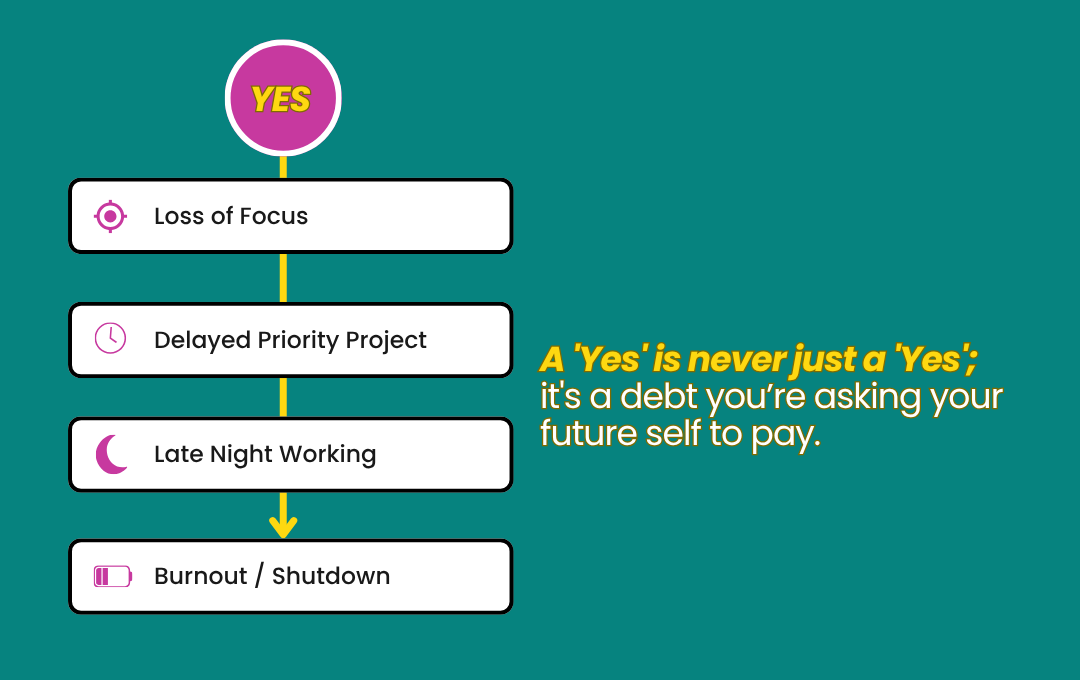
When a company is designed around constant founder availability, overreliance becomes inevitable. And when overreliance grows, burnout follows. Not because clients are unreasonable — because the system was unsustainable.
Boundaries Are Not Rejection
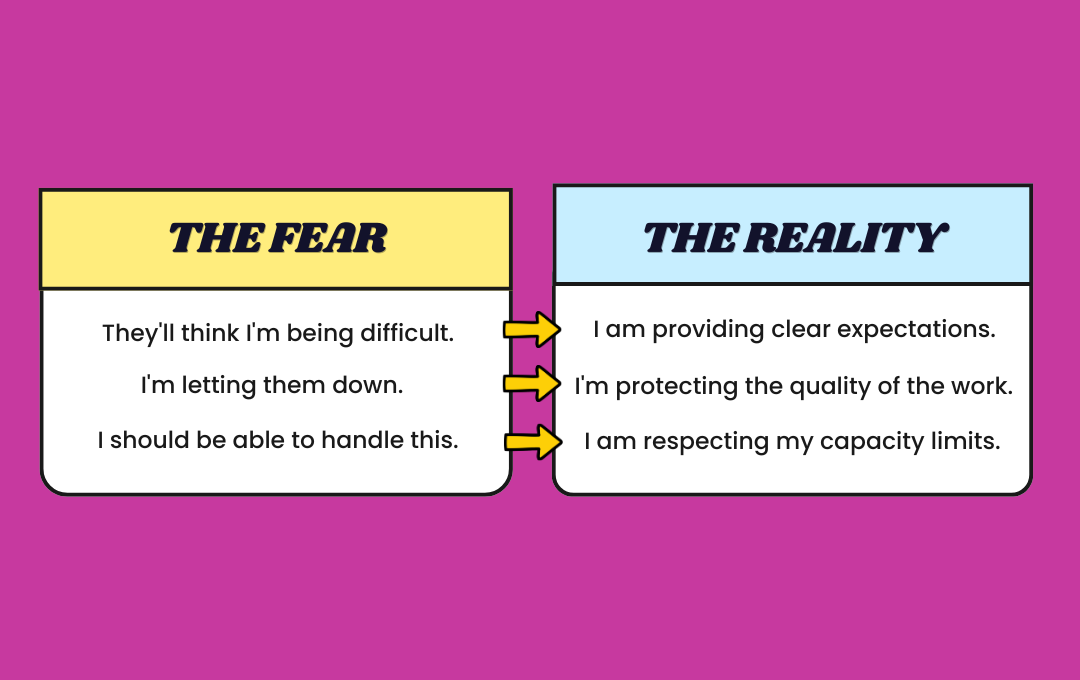
One of the biggest fears founders carry is that boundaries damage relationships.
They don’t. Boundaries define how work happens.
Healthy business boundaries clarify:
- What services are included
- How communication happens
- When responses should be expected
- Where requests should be submitted
These agreements remove ambiguity. And ironically, they often strengthen client relationships — because expectations become predictable.
When people know what to expect from you, they stop guessing. And when they stop guessing, they stop pushing.
Leadership Maturity
There’s a moment in every founder’s journey where leadership must evolve.
Early-stage founders survive through flexibility. Scaling founders survive through structure.
That shift feels uncomfortable. Because it means replacing people-pleasing habits with operational clarity.
Instead of saying yes automatically, you design systems that define how requests enter the business, how scope is managed, who owns decisions, and when communication happens.
This doesn’t make your business less supportive. It makes it sustainable.
Quick Diagnostic
- Do clients frequently ask for small favors outside project scope?
- Do you feel guilty pushing back on requests?
- Do you answer messages immediately even when it interrupts your work?
- Do new requests regularly expand beyond the original agreement?
If several of these land — your boundary systems need strengthening.
Final Insight
Saying “no” is hard for most founders. Not because they lack discipline — because their success was built on responsiveness.
But you cannot build a scalable business on unlimited access to the founder. Eventually the math breaks. And when the math breaks, burnout follows.
The solution isn’t becoming less helpful. It’s building a system where your business supports clients without depending on your constant availability.
Start with the Boundary Leak Audit. It reveals exactly where scope creep, communication overload, and unclear expectations are draining your time — and where clearer boundaries can reduce the pressure.
