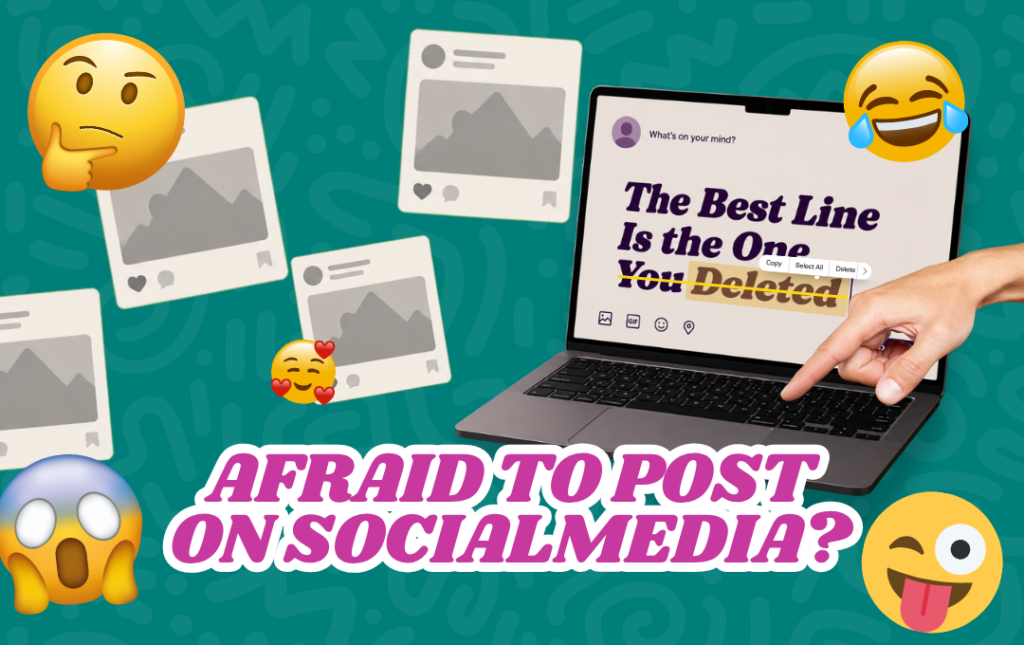
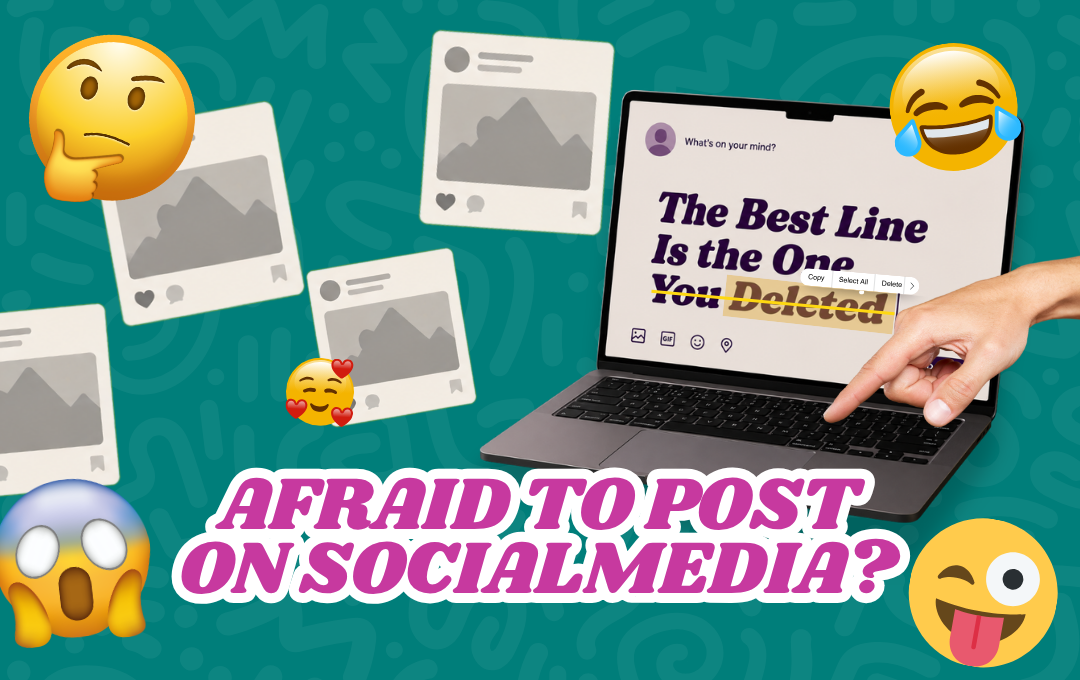
You wrote the post. The real one. The take you actually believe, the one with a little heat in it, the sentence that made you sit up straighter when it landed on the page.
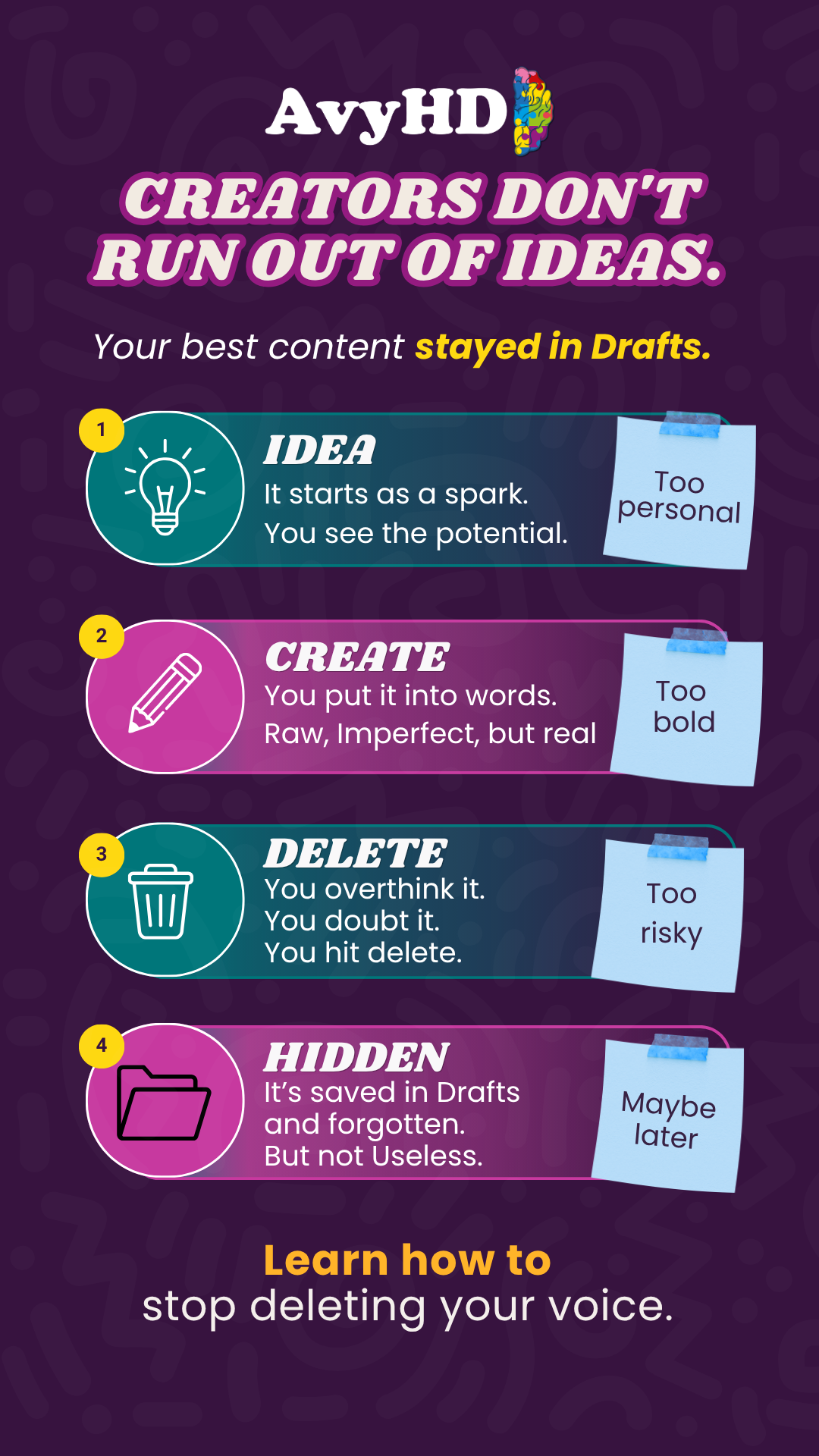
Then you read it back. Your stomach dropped. Too much, you decided. Too spicy, too personal, too likely to make someone in your inbox unhappy. So you deleted the line, softened the rest, and posted something safe instead. Or you didn’t post at all. You saved it to drafts, where it sits right now with all the others.
Here’s what I need you to hear, squirrel. The line that made your stomach drop was the best thing you wrote all week. And you buried it on purpose.
- Being afraid to post on social media is not a confidence flaw. It’s a pattern, and it has a fixable cause.
- Your drafts folder is a ledger of every risk you declined. The best material is usually in there, not on your feed.
- The stomach-drop isn’t a warning. It’s the signal that you finally said something only you could say.
- “I’ll post it when I’m more established” is a trap: you’re waiting to be established before doing the thing that establishes people.
- The fix is a Spicy Take Bank: capture the scary lines on purpose so they stop dying in drafts.
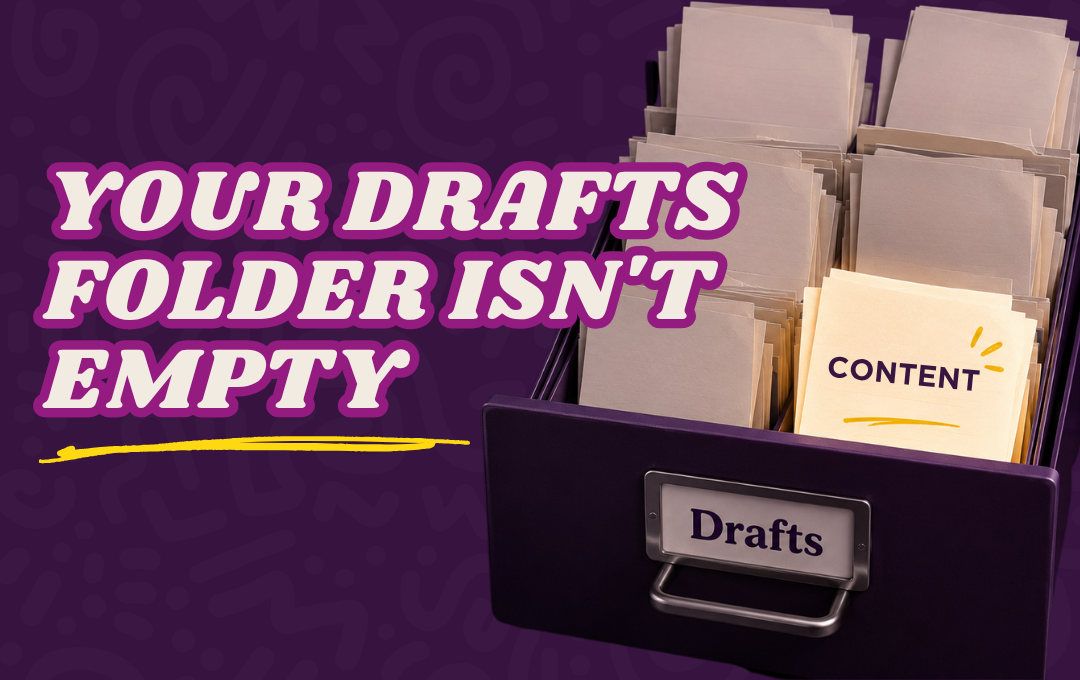
Your drafts folder is a confession
Open it. Actually open it. Scroll through the half-finished posts, the ones you never shipped, the captions that trail off right at the moment they got interesting.
Every one of those is the same story. You started telling the truth, you got scared, and you stopped. Which means your drafts folder isn’t a graveyard of bad ideas. It’s a ledger of declined risks. A running list of every moment you had something real to say and decided the safer move was to say nothing, or to say the beige version instead.
And here’s the part that stings: the drafts are better than the feed. The stuff you were too scared to publish is consistently stronger than the stuff you actually posted. You already know this. You just haven’t let yourself act on it.
Why the scary line is the valuable one
There’s a reason the take that frightens you is the one worth posting. Fear shows up precisely when you’ve said something specific, something with a point of view, something that couldn’t have come from anyone else. Safe content doesn’t trigger that feeling, because safe content has no edges to catch on.
Information is free now. It’s everywhere, endless, and mostly identical. The one thing that can’t be copied is a voice with an actual opinion attached to it. That’s the entire reason people follow anyone. Not for the tips. For the takes. And you’ve been deleting yours, one nervous line at a time, then wondering why the account feels flat.
“When I’m more established”
Here’s the story you tell yourself to make the deleting feel responsible. I’ll post things like that later. Once I’ve got more credibility. Once I’m more established.
Read that back slowly. You’re waiting to be established before doing the exact thing that establishes people. The strong point of view is not a reward you unlock after you make it. It is the mechanism by which you make it. Deferring the real voice until later isn’t patience. It’s the deleted draft again, wearing a more responsible-sounding costume.
The uncomfortable part
Nobody is making you delete the good lines. No editor is standing over you, no client who demanded blandness, no algorithm punishing you for having a spine. You are the one hitting delete.
That’s uncomfortable, and it’s also the good news. If the fear were coming from outside, you’d be stuck waiting for the world to change. It’s coming from you, which means the fix is available to you, right now, without anyone’s permission.
The fix: a Spicy Take Bank
Willpower won’t solve this. You can’t decide to be braver at the exact moment of maximum fear, four times a week, forever. What works is a system that catches the scary lines before you can bury them.
That’s a Spicy Take Bank. A single running document where every real opinion goes the moment you have it. The tangent you almost said out loud. The thing you believe that your niche doesn’t say. The line you cut from today’s post. You’re not committing to publish all of it. You’re just refusing to let it vanish. The bank turns your drafts folder from a place where good takes go to die into a supply of raw material you can pull from on purpose. The fear doesn’t disappear. It just stops getting a veto.
If you’re leading a nonprofit…
Executive directors delete drafts too, and usually the honest ones. The post about what the work actually costs. The candid line about what funders keep getting wrong. The story about a program that failed and what you learned. That candor is exactly what builds donor trust, because everyone can smell the sanitized version from a mile off. When your organization only ever publishes the safe, on-message update, supporters stop knowing what you actually stand for. The scary line is often the one that makes them give.
A quick gut-check
Not sure if this is your pattern? Sit with these honestly.
- How many finished posts are sitting in your drafts right now, unpublished?
- When you cut a line for being “too much,” is it usually the best line in the piece?
- Is there an opinion you hold that your audience has genuinely never heard you say?
- Do you tell yourself you’ll post the bolder stuff “once you’re more established”?
- When did you last publish something that made your stomach drop, and how did it actually perform?
If those hit, the problem was never a lack of good material. It’s that your best material keeps dying in drafts before anyone sees it.
The final insight
You’re not out of things to say. You’re sitting on a folder full of the best things you’ve ever written, declining to publish them one at a time. The bravery isn’t the hard part. The system that keeps the bravery cheap is.
You’re not broken. The system around your voice is. Let’s build a better one.
Start here
The Offer Spark Sprint will allow you to choose the best model for working your way to your social media contents without the pressure, protecting your energy, and sustaining your creativity. Download now, it’s free.
When you’re ready to design the fix on your real business data, that’s a Strategy Call with Avy. It’s the working session where we map how to recover the buried voice and make posting it low-risk, and you leave with a Decision Map within 72 hours.
