If you’re an ADHD entrepreneur, you’ve probably heard the advice: “Work harder. Push through. Just stay motivated.” Hustle culture glorifies long hours, constant productivity, and a never-ending grind. But here’s the hard truth—hustle culture isn’t built for ADHD brains.
In fact, it often makes things worse. Instead of more focus, hustle activates your stress response, drains your energy, and leaves you frustrated that you “can’t keep up.” The problem isn’t that you’re lazy or unmotivated. The problem is that hustle culture was never designed for neurodivergent entrepreneurs.
So, let’s talk about why hustle doesn’t work—and what actually does.
The Myth of Motivation
One of the biggest misconceptions about ADHD and entrepreneurship is the idea that you’re simply “not motivated enough.” Motivation isn’t the issue—it’s how ADHD brains experience motivation differently.
For neurotypical entrepreneurs, external rewards or sheer willpower might push them forward. ADHD motivation works through interest, novelty, and connection. That means when the task feels boring, abstract, or disconnected from immediate impact, your brain isn’t wired to respond to “just try harder.”
If you’ve ever felt inspired one day and stuck the next, it’s not a personal failing. It’s ADHD neurology. And no amount of hustle can override how your nervous system works.
How Hustle Activates the Stress Response
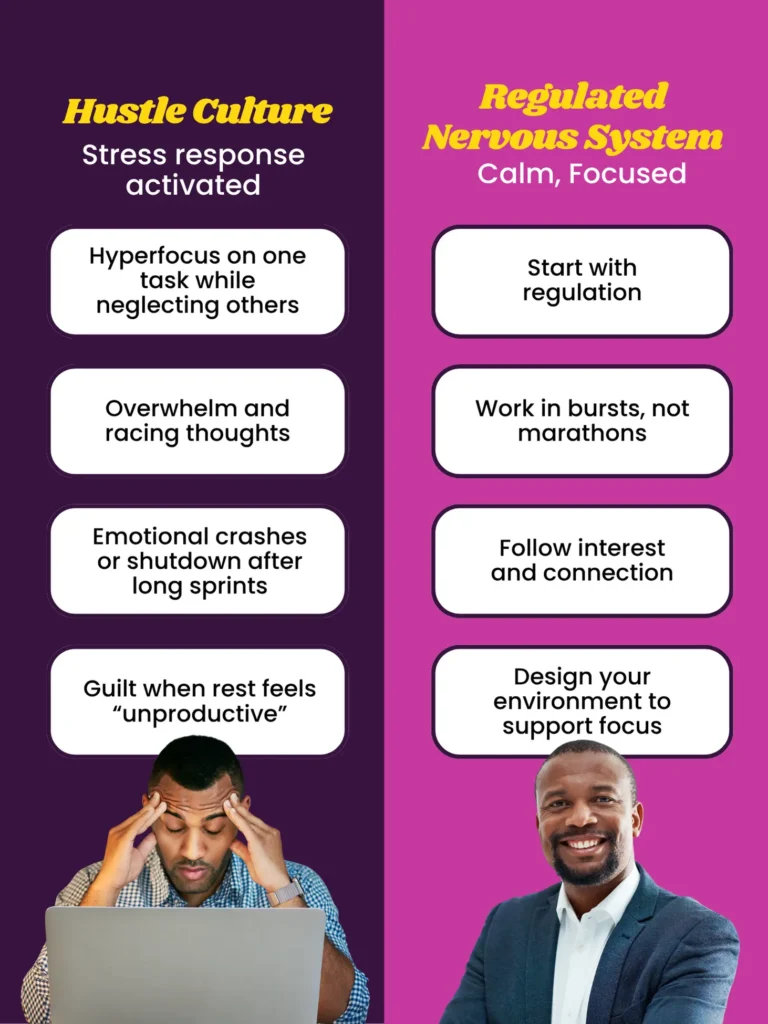
Now let’s look at what happens when you push harder anyway. Hustle culture keeps your nervous system in a constant state of “on”—fight, flight, or freeze.
For ADHD entrepreneurs, this often looks like:
- Hyperfocus on one task while neglecting others
- Overwhelm and racing thoughts
- Emotional crashes or shutdown after long sprints
- Guilt when rest feels “unproductive”
Studies confirm that ADHD brains are especially sensitive to psychosocial stress, which makes hustle culture a recipe for burnout (Frontiers in Psychiatry).
I remember when I tried pulling 10-hour workdays to keep up with other entrepreneurs. At first, I felt productive. But within days, my focus dropped, mistakes crept in, and I needed twice as long to recover. Hustle gave me less output, not more.
What Regulation Looks Like for Neurodivergent Brains
If hustle pushes you out of balance, the solution is nervous system regulation. For ADHD entrepreneurs, regulation isn’t a “nice to have”—it’s the foundation of sustainable productivity.
Here are some examples of what regulation looks like in practice:
- Working within your window of tolerance. This is the range where your nervous system feels safe and steady—not overstimulated and not shut down (Neurodivergent Insights).
- Building in recovery, not just effort. Rest, breaks, and downtime are part of the process, not wasted time.
- Using sensory and movement tools. Breathing, grounding exercises, short walks, or adjusting your environment (lighting, noise, textures) can help regulate your energy (Seasons of Growth Counseling).
Think of regulation as your business strategy. When your nervous system is calm and balanced, your brain has the clarity to plan, focus, and create.
Building Momentum Without Hustle
So if hustle doesn’t work, how do ADHD entrepreneurs create success? The answer is momentum. Not forced, frantic motion—but sustainable, repeatable actions aligned with your brain and body.
Here are four ways to build momentum:
- Start with regulation. Ground yourself before you dive into work. Even two minutes of breathing or stretching sets the tone.
- Work in bursts, not marathons. Use your focus windows for deep work, then pause to recover before the next round.
- Follow interest and connection. For ADHD motivation, interest is fuel. Break tasks into smaller, engaging steps or tie them to personal meaning.
- Design your environment to support focus. From lighting and background noise to accountability check-ins, structure matters more than willpower.
When I began structuring my day around 20-minute focus blocks with short sensory walks in between, I noticed something surprising: I accomplished more in less time and actually felt energized at the end of the day. That’s momentum that feels good.

From Hustle to Harmony
Hustle culture tells ADHD entrepreneurs to push harder. But your nervous system is telling you something else: regulate, restore, and move forward in ways that honor your brain.
If you’re ready to shift from hustle to harmony, I’d love to invite you to my free webinar:
👉 From Hustle to Harmony: How to Regulate Your Nervous System & Build a Business That Feels Good
You’ll walk away with tools, strategies, and ADHD-friendly business tips you can start using right away. Sign up here!