
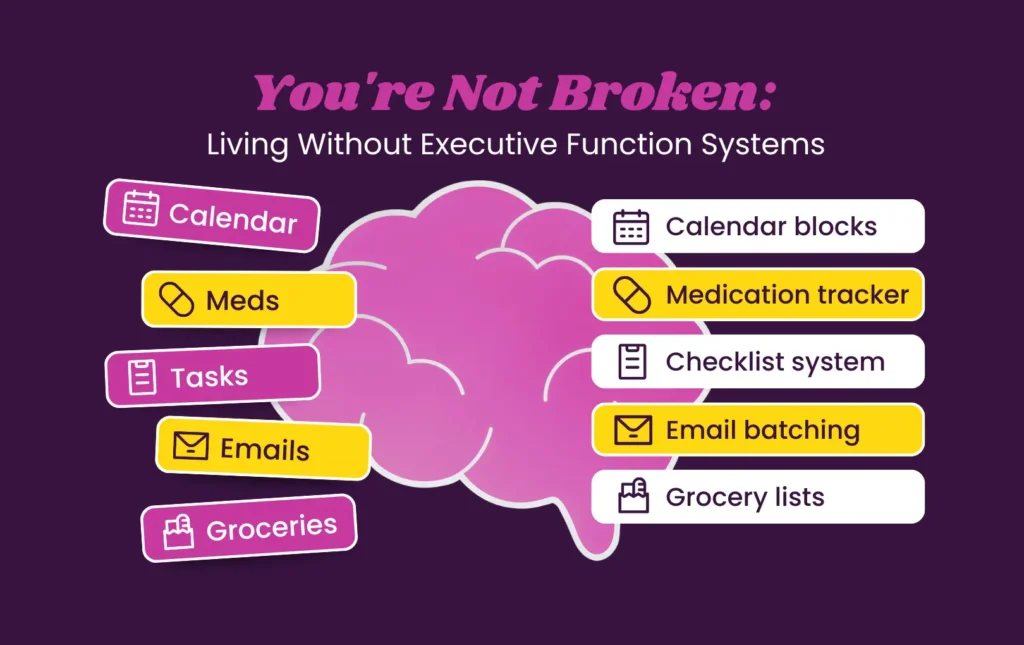

“You’re not behind. You’re just carrying too much in your head.”
If you’re neurodivergent and exhausted, it’s easy to assume you’re failing at something basic — like routines, organization, or self-care.
But here’s the truth most people never say out loud:
Your brain isn’t broken.
Your life is just running without the systems your brain needs.
This isn’t a motivation issue.
It’s an executive function load that’s been left unsupported.
And once you see that clearly, everything starts to make more sense and feel a lot less personal.
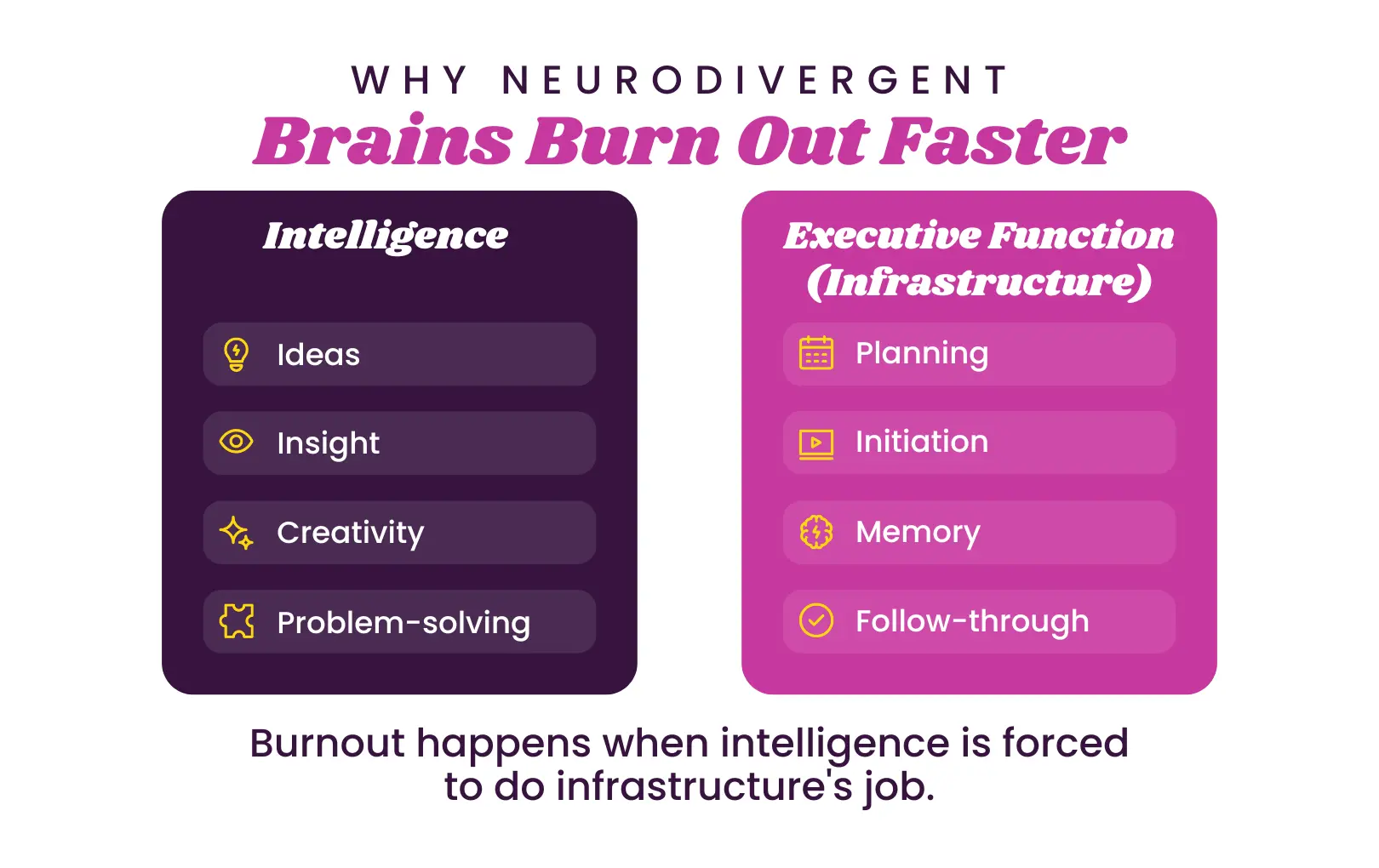
Why Neurodivergent Brains Burn Out Faster
Neurodivergent people, especially ADHDers, often have a powerful intellect alongside a nervous system that tires faster than it “should.”
But if I’m so smart, then why can’t I do the most basic things?
Because executive function is not intelligence.
It’s infrastructure.
Executive function is what allows you to plan, initiate, remember, and follow through. When you don’t have external systems supporting those tasks, your brain is constantly overdrawn — no matter how smart or capable you are.
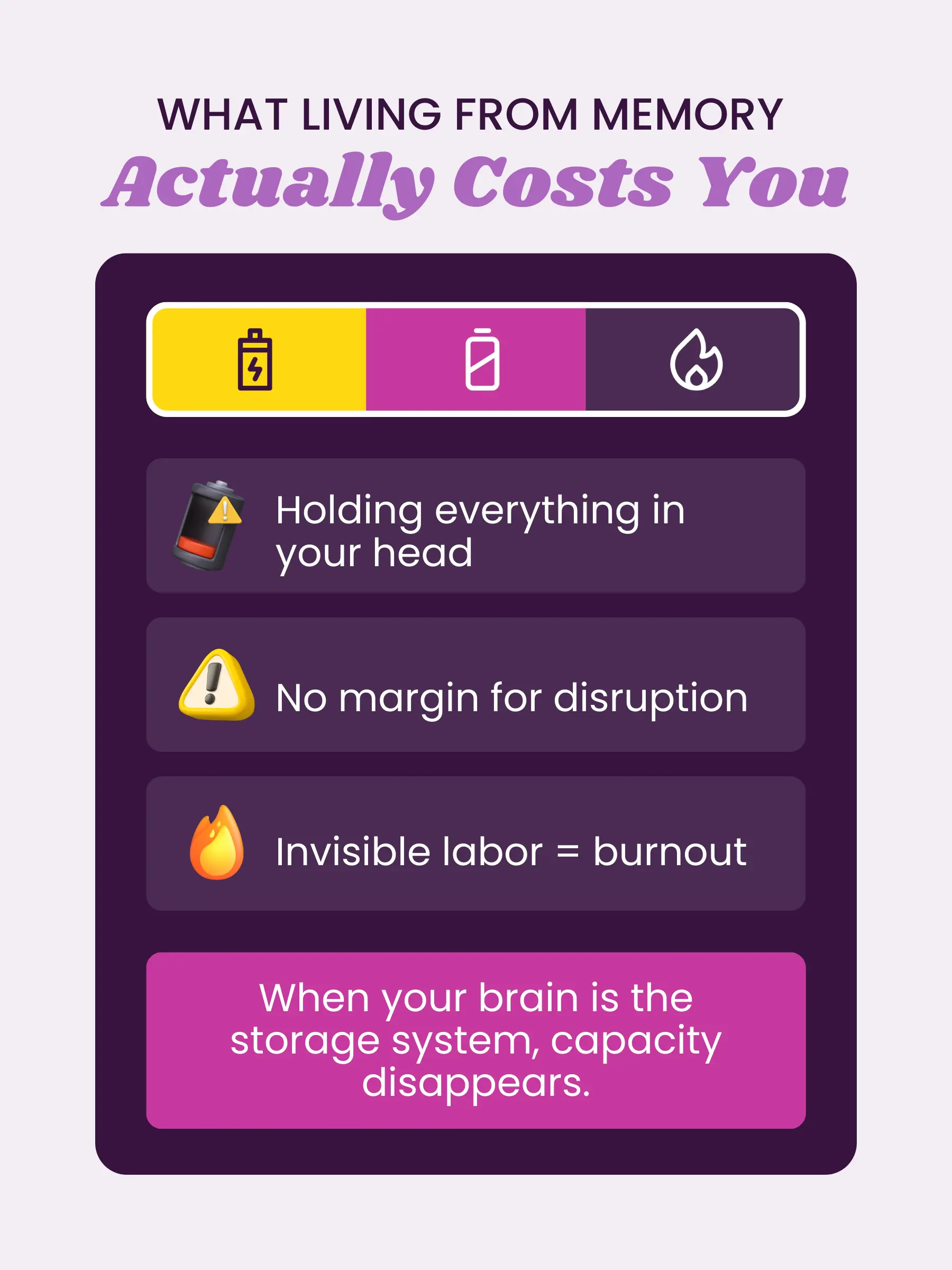
What Living from Memory Actually Costs You
When you’re storing your entire life in your head:
- You’re burning cognitive fuel just to survive the day
- You’re operating with zero margin for change or disruption
- You’re doing invisible labor that drains you like a second job
That’s not sustainable. And it’s not your fault.
But it is within your control.
The Life Admin Load No One Taught You to Systemize
Even the highest-functioning adults — the ones who seem to have it all together — are often privately drowning in life admin they were never taught to manage.
What does that look like?
- Keeping track of medications or supplements
- Planning meals while already hungry
- Booking (and remembering) appointments
- Managing logistics, emails, reminders, household tasks
If you’ve been told you should “just remember,” “just plan better,” or “just write it down,” the shame stacks up fast.
(And if you’re also parenting, caregiving, or managing chronic health conditions? That load multiplies.)
Your brain isn’t the problem.
The problem is that you’ve been left to manage life without support systems.
This isn’t another “5 ADHD morning routines” list. This is infrastructure.
What You Actually Need (It’s Not Willpower)
Here’s something no planner or motivational podcast will tell you:
Motivation is not a strategy.
And “try harder” is not a real solution.
You don’t need:
- More alarms you’ll snooze through
- More goals you’ll shame yourself for not hitting
- More pressure to keep it all together
You need external memory, shared systems, and automation that gives your brain a break.
What Happens When Systems Start Carrying the Weight
When you build infrastructure that holds up your life — even when motivation flatlines — something incredible happens:
Your brain stops buzzing 24/7.
You stop living in fear of forgetting something important.
Your nervous system finally gets to breathe.
External systems do more than organize your tasks.
They regulate your capacity.
They turn self-care from a moral failing into a design problem.
They create reliability where you’ve only had reactive energy.
This is the kind of support that doesn’t require morning motivation or an ideal version of you to show up first.
It just works — because it’s built to.
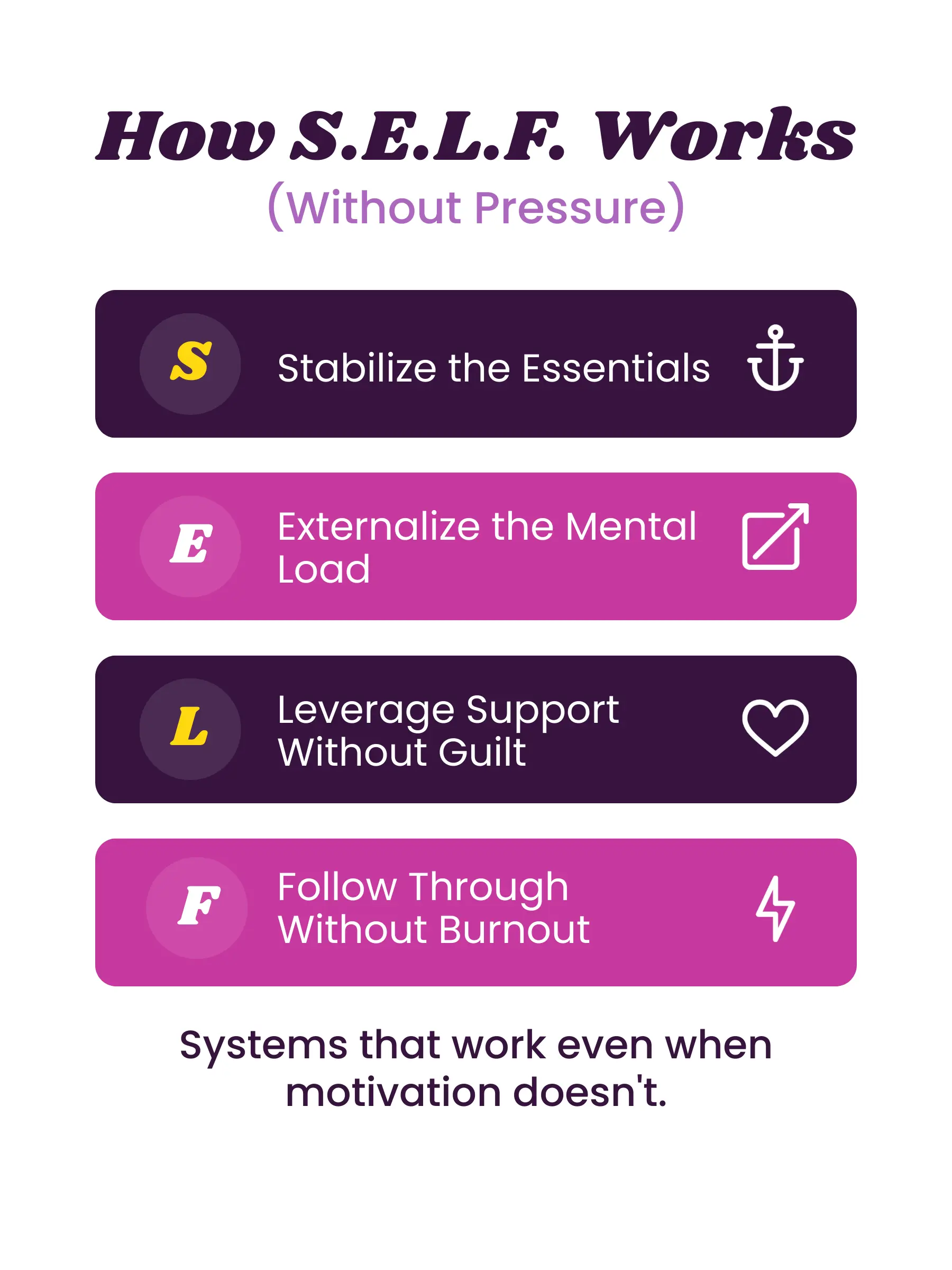
How S.E.L.F. Works (Without Pressure)
That’s where S.E.L.F. — Systems Empowering Life Freedom — comes in.
This framework isn’t about productivity.
It’s about protecting your energy and reclaiming capacity.
S.E.L.F. is built for neurodivergent minds. It helps you:
Stabilize the Essentials — like meals, meds, and calendars, so survival mode stops being your baseline
Externalize the Mental Load — so your entire life doesn’t live in your head anymore
Leverage Support Without Guilt — because doing it all yourself isn’t leadership, it’s exhaustion
Follow Through Without Burnout — even on low-energy days, because the system remembers when you can’t
You don’t have to do everything at once.
You don’t even have to feel ready.
You just need somewhere to start — gently.
Start Here: Unload What’s Overwhelming You
Before you build anything, you need to see what you’re actually carrying.
The S.E.L.F. Reset Sheets help you:
✓ Unload what’s overwhelming your brain
✓ Identify your biggest capacity drains
✓ Begin seeing what shouldn’t live in your head anymore
No pressure. No perfection. Just relief and clarity.